FAIR › Scripture Study Resources: Supplement Your Come, Follow Me Study › Study Resources for the Doctrine & Covenants and Church History › Week 45 A Voice of Gladness for the Living and the Dead
DOCTRINE AND COVENANTS 125-128
Doctrinal Focus
- Key doctrines addressed in this week’s reading
The Salvation of the Dead Is Central to God’s Plan of Happiness
Baptism for the dead is a divinely revealed ordinance essential for the salvation of all God’s children.
- Joseph Smith taught that “the salvation of the dead is one of the most important duties we have,” declaring it “necessary and essential to our salvation” (D&C 128:15). This principle reflects God’s justice and mercy, ensuring all His children have access to saving ordinances, no matter when or where they lived.
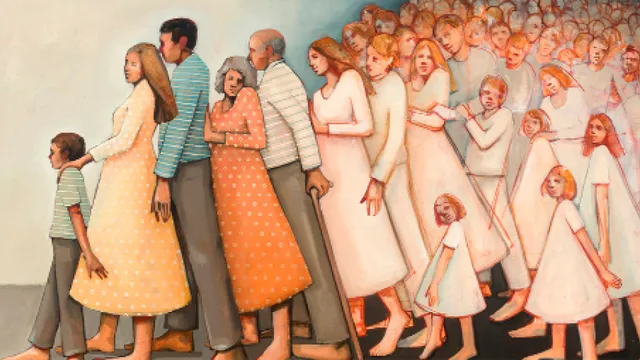
Performing ordinances for the dead helps bind generations together in an eternal family.
Doctrine and Covenants 128:18 describes this work as creating a “welding link” between generations, preventing the earth from being “smitten with a curse.” This “binding power” is possible through priesthood ordinances performed in temples and mirrors the unifying and healing power of Jesus Christ’s Atonement.
Record Keeping in God’s Work Is Sacred and Eternal
What is recorded on earth in righteousness is also recorded in heaven.
The Lord revealed that ordinances for the dead must be carefully recorded by those with proper priesthood authority (D&C 128:6–7). These records are not just administrative but sacred, ensuring order and accountability in God’s kingdom.
Keeping personal and family records aligns us with God's purposes.
By recording our spiritual experiences and participating in family history, we reflect the same principle the Lord gave regarding temple ordinances (D&C 127:7). Elder Dale G. Renlund taught that these efforts not only bless our ancestors but also bring healing to our own lives.
God Cares Deeply About Families and Commands Us to Care for Ours
Caring for our families is a divine calling and sacred responsibility.
- The Lord told Brigham Young to “take especial care of [his] family,” acknowledging their sacrifices and his duty to care for them (D&C 126:3). This teaches that even in times of great public responsibility, family must remain a spiritual priority.
The Lord honors sacrifice but also calls for balance in discipleship.
Gospel service sometimes requires sacrifice, but God does not overlook the needs of those closest to us. As outlined in the article Take Special Care of Your Family, fulfilling our divine roles as parents, siblings, or children is central to our discipleship.
Historical & Contextual Insights
- Insights in this week’s study
Setting
- In the early 1840s, the Latter-day Saints were gathering in Nauvoo, Illinois, after fleeing intense persecution in Missouri. The Church was rapidly organizing and expanding, and Joseph Smith was receiving critical revelations about temple ordinances and record keeping.
Context
- Doctrine and Covenants 127 and 128 are letters written by Joseph Smith in August and September 1842 while he was in hiding due to renewed threats of arrest stemming from the assassination attempt on former Missouri Governor Lilburn Boggs. Despite his precarious circumstances, Joseph was focused on conveying divine instructions about baptism for the dead. These letters were later canonized due to their doctrinal significance.
Significance
- These sections highlight the Prophet’s unwavering dedication to God’s work even in adversity. They also mark a turning point in temple theology, especially concerning salvation for the dead, record keeping, and the eternal nature of family connections.
Takeaway
- Even in isolation and under pressure, the Prophet prioritized sacred duties and the eternal salvation of God’s children. His faithfulness reminds us that adversity cannot stop God’s work and that our focus should remain on eternal priorities even in trials.
Baptism for the dead was first publicly introduced at the funeral of Seymour Brunson in August 1840, offering hope to grieving Saints.
- At the time, many members were troubled by the fate of their loved ones who had died without receiving gospel ordinances. Joseph Smith shared what he had learned from the Lord: that the dead could receive the gospel through vicarious ordinances performed by the living. This teaching brought great comfort, especially to Jane Neyman, whose unbaptized teenage son had recently died.
- The doctrine directly responded to real emotional needs among the Saints, transforming grief into spiritual motivation. Instead of despair, Saints now had a divine mission to assist their ancestors.
- This moment underscores how personal loss can be a catalyst for revelation and progress in the Church. It also shows the Lord’s compassion, revealing eternal truths at precisely the time His people needed comfort and direction.
The meticulous instruction to record ordinances reflects the divine order of God’s kingdom and connects earthly actions to heavenly records.
- In Doctrine and Covenants 127:6–7 and 128:6–9, the Lord emphasizes that baptismal ordinances for the dead must be recorded precisely and properly. This was not a mere administrative task—it was essential to the validity and eternal nature of the ordinance. Joseph taught that what is “recorded on earth shall be recorded in heaven,” showing how divine law governs both spiritual and practical aspects of gospel work.
- These verses laid the foundation for temple record-keeping practices today, including the use of witnesses and official records for all vicarious ordinances. They highlight the sacred trust placed in Church members to be exact in performing and documenting God’s work.
- The principle has broad application—even personal journals, family records, and faith-promoting experiences we preserve can contribute to the Spirit of Elijah and help connect generations in God’s plan.
If you have questions on this week’s reading, please email your questions to us here.
Apologetic Application
Criticism 1: "Baptism for the dead is a made-up and unbiblical practice."
- Claim: “Joseph Smith invented the doctrine of baptism for the dead to expand the Church’s reach and control.”
- Response:
- Historical Evidence: Baptism for the dead was introduced in 1840, shortly after the death of Seymour Brunson, and quickly became a central and joyful doctrine among the Saints. The practice was not convenient or institutionally easy—it required construction of temples, detailed record keeping, and faith during hardship.
- Eyewitness Support: Contemporary Saints, including Jane Neyman and Vienna Jacques, testified of the powerful spiritual confirmation they received as they participated in early proxy baptisms, often under difficult conditions in the Mississippi River.
- Spiritual Confirmation: Many Latter-day Saints feel deep spiritual resonance when performing vicarious ordinances in temples. The Holy Ghost bears witness that this practice is part of God’s merciful plan to offer salvation to all His children.
- Logical Analysis: If God is just, He must provide a path to salvation for those who never had the chance to hear the gospel in mortality. Baptism for the dead satisfies both justice and mercy, allowing choice without coercion—unlike many exclusivist interpretations of salvation.
Criticism 2: Joseph Smith’s revelations during times of legal trouble were convenient and self-serving."
- Claim: “D&C 127 and 128 were Joseph’s attempt to shift attention away from his legal issues.”
- Response:
- Historical Evidence: Joseph wrote Doctrine and Covenants 127 and 128 while in hiding due to false accusations related to an assassination attempt on former Missouri Governor Boggs. Despite personal risk, he remained focused on instructing the Church in sacred temple doctrine.
- Eyewitness Support: Church members recorded receiving these letters with reverence, recognizing them as spiritual guidance, not distractions. The content is doctrinal, not political, emphasizing record keeping, eternal ordinances, and divine joy.
- Spiritual Confirmation: Saints today testify that these sections bring deep understanding and peace, particularly regarding family history and eternal connections. These revelations speak to the soul, not to Joseph’s legal defense.
- Logical Analysis: If Joseph were motivated by self-preservation, why would he introduce complex, demanding doctrines requiring more structure and effort? These revelations added burden, not convenience, to an already strained Church.
Criticism 3: "The welding link between generations is sentimental myth, not doctrine."
- Claim: “The idea that salvation depends on our ancestors is unfounded and emotionally manipulative.”
- Response:
- Historical Evidence: The concept of intergenerational salvation is rooted in Malachi 4:5–6 and reaffirmed in D&C 128:18, where Joseph states the earth would be “utterly wasted” without this connection. The doctrine did not arise from emotionalism but from scriptural revelation.
- Eyewitness Support: Saints who heard Joseph preach on this subject, such as in the funeral discourse for Seymour Brunson, testified of the power and clarity with which he taught these eternal truths. They acted immediately to engage in family temple work.
- Spiritual Confirmation: The Spirit of Elijah, or the desire to connect with ancestors, is a widely reported spiritual experience among Saints involved in family history work. Many feel guided, healed, and changed through these efforts.
- Logical Analysis: The welding link aligns with the eternal nature of families and the justice of a God who values every soul. It satisfies a universal longing for continuity and belonging while preserving individual agency.
Practical Applications
Practical solutions for someone in faith crisis:
Participate in Family History and Temple Work
Action Step: Identify one ancestor who needs temple ordinances and begin their work using FamilySearch.org.
Why it helps:
Engaging in family history deepens your understanding of God’s plan and brings joy to both the living and the dead. It invites the Spirit of Elijah into your life and helps fulfill the commandment to bind families together for eternity.
How to do it:
- – Create or update your FamilySearch account.
- – Explore your family tree and identify a name needing temple ordinances.
- – Use the Temple tab to reserve ordinances and print a name for the temple.
- – Attend the temple and perform the ordinance or share it with a family member or ward group.
Encouraging Thought:
“What a glorious and wonderful provision the Almighty has made through His revelation to His Prophet.” —President Gordon B. Hinckley
Keep a Personal Record of Your Spiritual Experiences
Action Step: Begin (or renew) the habit of recording spiritual impressions, blessings, and experiences in a journal.
Why it helps:
Doctrine and Covenants 127–128 emphasizes that records made on earth matter to heaven. Keeping a personal spiritual record preserves your testimony, reinforces faith, and provides inspiration for you and future generations.
How to do it:
- – Set aside a few minutes once a week (e.g., Sunday evening) for journaling.
- – Write about any promptings, answered prayers, or spiritual lessons you received.
- – Consider organizing entries by themes like “gratitude,” “family,” or “priesthood blessings.”
- – If digital journaling helps, use tools like the Gospel Library app’s notes feature.
Encouraging Thought:
“Whatsoever you record on earth shall be recorded in heaven” (Doctrine and Covenants 128:8).
Prioritize Caring for Your Family Spiritually and Temporally
- Action Step: Evaluate your time and priorities to ensure you’re taking “especial care” of your family.
Why it helps:
The Lord instructed Brigham Young to shift his focus toward his family after years of public service (D&C 126:3). Caring for family is not secondary to discipleship—it is central. Making time for connection, instruction, and presence strengthens your home as a sanctuary of faith.
How to do it:
- – Reflect on how your family relationships are doing.
- – Choose one way to be more present or intentional this week (e.g., a family prayer, personal note, one-on-one time).
- – Schedule it, do it, and follow up on how it felt or what you learned.
- – Seek the Lord’s help in prayer to magnify your efforts at home.
Encouraging Thought:
“Our homes are the ultimate setting for learning, living, and teaching the gospel” —Teaching in the Savior’s Way, p. 9.
Ideas for Teaching
The Most Glorious Subject
Objective: Help learners understand the joy and eternal significance of baptism for the dead.
Materials Needed:
A picture of a temple baptismal font, copies of D&C 128:15–18, paper and pens
Activity Steps:
Activity Steps:
- Introduction (5 min): Show the picture of the baptismal font and ask, “What do you think happens here—and why does it matter?” Invite a few thoughts.
- Scripture Discussion (5 min): Read D&C 128:17 aloud and highlight phrases like “most glorious of all subjects” and “welding link.” Ask: Why do you think Joseph Smith used such joyful, powerful language?
- Application (5 min): Have learners write the name of one ancestor they know and one thing they could do to learn more or help them (e.g., find a story, do temple work). Invite them to share what they feel.
Follow-Up Question: Why do you think this doctrine brings so much joy to those who understand it?
Take Especial Care of Your Family
Objective: Help learners understand the importance of prioritizing family care in their discipleship.
Materials Needed:
Family photo or drawing materials, D&C 126:3, whiteboard or paper
Activity Steps:
Activity Steps:
Introduction (5 min): Ask: “What’s something small someone in your family has done recently that showed love or care?” Invite 2–3 responses.
Scripture Discussion (5 min): Read D&C 126:3 aloud. Briefly summarize Brigham Young’s missions and what this verse meant. Ask: Why would the Lord emphasize caring for family?
Application (5 min): Have learners draw or write one way they will “take especial care” of their family this week. Share as appropriate.
Follow-Up Question: How can taking care of your family be a way to serve the Lord?
Written in Heaven
Objective: Teach learners the eternal value of recording sacred experiences and ordinances.
Materials Needed:
Journal pages or notebooks, D&C 127:6–7; 128:8, optional example of a family history record
Activity Steps:
Activity Steps:
Introduction (5 min): Ask: “If you could preserve one story or memory forever, what would it be and why?” Invite brief answers.
Scripture Discussion (5 min): Read D&C 127:6–7 and discuss why God commanded that records of baptisms for the dead be exact. Point out that Joseph taught these would be recorded in heaven.
Application (5 min): Give everyone a journal page and invite them to record a spiritual experience, prompting them with questions like: “When did I feel God’s love recently?” or “What prayer was answered?”
Follow-Up Question: Why do you think God cares so much about what we record?
QUICK REFERENCE
Key Points
- Baptism for the dead is a divinely revealed ordinance that offers salvation to those who died without gospel covenants.
- Record keeping, especially for sacred ordinances, is a divine principle with eternal implications.
- God commands us to take “especial care” of our families—both the living and the dead.
- Joseph Smith received powerful revelations during times of intense persecution, demonstrating his prophetic calling.
- The work of connecting generations in the gospel is essential to the completion of God’s plan.
Core Apologetic Answers
- Why trust modern prophets?
- Modern prophets, like Joseph Smith, have consistently taught eternal truths that align with scripture, answer deep spiritual questions, and bring light to lives. Prophets face opposition just as ancient ones did, but their fruits—revelation, restored ordinances, and the unity of families—are evidence of divine authority.
- Why does God allow mistakes?
- God works through imperfect people to accomplish perfect purposes. As seen with Brigham Young in D&C 126, God corrects, redirects, and sustains His leaders. Mistakes are not proof of falsehood—they are proof that God’s work is ongoing and that He honors agency while still guiding His Church.
Key Resources
Scriptures
- Doctrine and Covenants 128:15–18 – The salvation of the dead is essential to our salvation.
Doctrine and Covenants 127:6–7 – Sacred ordinances must be recorded on earth and in heaven.
Church Documents
- “Family History and Temple Work: Sealing and Healing” – Elder Dale G. Renlund (May 2018)
“The Great Things Which God Has Revealed” – President Gordon B. Hinckley (May 2005)
Online Resources
- FamilySearch.org – Find ancestors and prepare names for the temple.
- “Temple and Family History” collection – Videos and helps for learning and teaching family history.