FAIR › Scripture Study Resources: Supplement Your Come, Follow Me Study › Study Resources for the Doctrine & Covenants and Church History › Week 9 Is Any Thing Too Hard for the Lord?
Genesis 18-23
Doctrinal Focus
- Key doctrines addressed in this week’s reading
God’s Promises Are Sure, Even When They Seem Impossible
The Lord promised Abraham and Sarah a child despite their old age.
- When Sarah laughed in disbelief, the Lord asked, “Is any thing too hard for the Lord?” reminding us that divine promises transcend human limitations. This teaches us that God fulfills His word in His timing and way. (Genesis 18:10–14)
God requires faith and patience in waiting for His promises.
Isaac’s birth, long after the promise was first given, demonstrates that God’s timing is perfect. Trusting Him builds resilience and deepens our reliance on His covenant faithfulness. (Genesis 21:1–2)
Faith Is Tested to Refine and Strengthen Us
Abraham’s faith was tested when he was commanded to offer Isaac as a sacrifice.
This supreme test showed Abraham’s absolute trust in God, even when the command seemed incomprehensible. Trials of faith refine disciples and prove their devotion to the Lord. (Genesis 22:1–2)
God provides a way to fulfill His commands.
Just as God provided a ram in place of Isaac, He provides strength and deliverance for His covenant children today. This event also foreshadows Jesus Christ, the Lamb of God, who was offered as a sacrifice for the sins of the world. (Genesis 22:11–14)
God’s Covenant Blessings Extend Through Generations
God renewed His covenant with Abraham, confirming promises of posterity, land, and blessings.
- These blessings extended beyond Abraham’s lifetime, shaping the destiny of nations and pointing to Christ’s ultimate fulfillment of the covenant. (Genesis 22:15–18)
Covenant faithfulness impacts future generations.
Abraham was chosen to “command his children and his household” in righteousness, showing that parents’ covenant faithfulness can bless posterity and prepare them to continue God’s work. (Genesis 18:17–19)
Historical & Contextual Insights
- Insights in this week’s study
Setting
- Abraham and Sarah lived in the land of Canaan during a time when tribal societies depended heavily on lineage and inheritance. Posterity was central to survival, identity, and covenantal promises.
Context
In their old age, Abraham and Sarah were promised a son, which seemed impossible given natural limitations. Later, Abraham was commanded to sacrifice Isaac, the very child of promise. These events took place in a cultural world where child sacrifice tragically existed among surrounding nations, though God never intended Abraham to follow through.
Significance
- The narrative highlights that God’s covenant purposes cannot be thwarted by human weakness or cultural norms. He both fulfilled the promise of Isaac and redefined sacrifice through substitution, pointing forward to Christ.
Takeaway
- Even when God’s promises seem delayed, unlikely, or difficult to understand, He is faithful. His covenants extend beyond cultural pressures and personal limitations, offering assurance that “nothing is too hard for the Lord.”
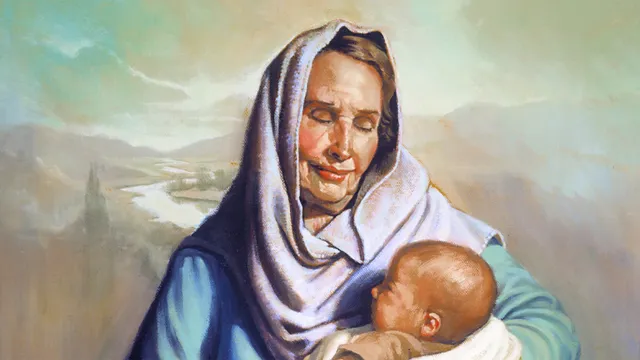
Sarah’s conception in old age illustrates that God fulfills His promises on His timetable, not ours.
- When Sarah laughed at the idea of bearing a child, the Lord responded, “Is any thing too hard for the Lord?” (Genesis 18:14). This phrase captures the central message of this block: God’s timing is perfect, and His promises are sure even when circumstances seem impossible.
- The long wait for Isaac’s birth teaches patience. God’s promises often unfold gradually, requiring endurance, faith, and trust in His plan.
- Believers today can find comfort that unfulfilled hopes are not forgotten. God sees the bigger picture, and His delays often prepare us to better receive His blessings.
Abraham’s willingness to offer Isaac prefigures the atoning sacrifice of Jesus Christ.
- Genesis 22 portrays Isaac carrying the wood of his own sacrifice, paralleling Christ carrying His cross. God providing a ram as a substitute mirrors Christ’s role as the Lamb of God, sacrificed in our place.
- The test was not about cruelty but about Abraham’s faith and symbolic teaching. God stopped the sacrifice, showing He does not require human blood but provided His Son as the ultimate offering.
- This account helps believers recognize God’s love and Christ’s central role in the plan of salvation. The story strengthens faith that God’s covenant promises are fulfilled through Jesus Christ.
If you have questions on this week’s reading, please email your questions to us here.
Apologetic Application
Criticism 1: “The promise that elderly Sarah could bear a child is biologically impossible.”
- Claim: “The birth of Isaac is just a myth.”
- Response:
- Historical Evidence: Ancient Israelite records consistently testify of Isaac’s miraculous birth (Genesis 18:10–14; 21:1–3). Similar miracle-birth narratives appear throughout scripture (Hannah, Elizabeth), showing this is part of God’s covenant pattern.
- Eyewitness Support: Abraham and Sarah both recorded their astonishment and joy, providing first-hand testimony of God’s intervention. Their descendants preserved these accounts as sacred history.
- Spiritual Confirmation: The Holy Ghost testifies that God’s power is not limited by natural law. Believers often feel peace and assurance that God can work miracles in their own lives.
- Logical Analysis: If God created life itself, enabling Sarah to conceive at an advanced age is consistent with His power. The impossibility from a human perspective only highlights divine intervention.
Criticism 2: “God’s command for Abraham to sacrifice Isaac is cruel and inconsistent with divine love.”
- Claim: “This story shows God as abusive, not merciful.”
- Response:
- Historical Evidence: In Abraham’s cultural context, child sacrifice tragically existed among surrounding nations, but God never intended Isaac to die — He intervened to stop it (Genesis 22:11–12).
- Eyewitness Support: Abraham himself testified that God would “provide himself a lamb” (Genesis 22:8). This reflects trust in God’s plan rather than fear of cruelty.
- Spiritual Confirmation: The Spirit affirms the story as a foreshadowing of Christ’s atonement, showing God’s willingness to provide His own Son as a sacrifice for all.
- Logical Analysis: The event was a test of loyalty and a symbolic teaching, not an endorsement of cruelty. God proved that He rejects human sacrifice and instead provides divine redemption.
Criticism 3: “Abraham’s covenant promises of land and posterity are outdated and irrelevant today.”
- Claim: “These blessings only applied to Abraham’s tribe.”
- Response:
- Historical Evidence: Biblical prophets and New Testament apostles repeatedly affirmed that Abraham’s covenant extended to all nations (Genesis 22:18; Galatians 3:29).
- Eyewitness Support: Modern prophets testify that the covenant continues, applying to every baptized member of Christ’s church today.
- Spiritual Confirmation: Many believers feel the Spirit when studying the Abrahamic covenant, recognizing their personal role in God’s promises of gathering and blessing.
- Logical Analysis: If God’s plan is eternal, His covenants cannot be temporary. The Abrahamic covenant’s reach across generations and nations testifies of its ongoing relevance.
Practical Applications
Practical solutions for someone in faith crisis:
Trust in God’s timing when promises seem delayed.
Action Step: Write down a personal promise or blessing you are waiting on and offer it in prayer, asking for patience and faith.
Why it helps:
Waiting on God can feel discouraging, but acknowledging His timing deepens trust and allows us to focus on growth during the waiting period.
How to do it:
- – Identify a specific promise or blessing you are waiting to see fulfilled.
- – Write it down in a journal and date it.
- – Pray specifically for patience and strength.
- – Record small evidences of God’s hand in your life while you wait.
Encouraging Thought:
“Is any thing too hard for the Lord?” (Genesis 18:14). With God, even what seems impossible is possible.
Strengthen faith through obedience in times of testing.
Action Step: Choose one commandment you find difficult to keep and commit to live it fully this week.
Why it helps:
Like Abraham with Isaac, obedience during trials demonstrates trust in God and invites His power into our lives. Testing seasons are refining, not punitive.
How to do it:
- – Reflect on a commandment or principle you have struggled with.
- – Set a clear, achievable goal related to it.
- – Pray daily for strength to follow through.
- – At week’s end, record the blessings you experienced through obedience.
Encouraging Thought:
Faith in God includes faith in His timing, His will, and His ways.
Pass on covenant blessings to the next generation.
- Action Step: Share a personal story of faith or covenant keeping with a child, family member, or friend.
Why it helps:
Abraham was charged to “command his children… to keep the way of the Lord” (Genesis 18:19). Sharing faith helps others see God’s promises as relevant and personal.
How to do it:
- – Think of a time when keeping a covenant blessed you.
- – Write down the story briefly.
- – Share it in a natural setting (family prayer, lesson, conversation).
- – Bear a simple testimony of God’s faithfulness.
Encouraging Thought:
- President Russell M. Nelson said, “The greatest compliment that can be earned here in this life is to be known as a covenant keeper.”
Ideas for Teaching
Is Anything Too Hard for the Lord?
Objective: Help learners build faith that God’s promises are sure, even when they seem impossible.
Materials Needed:
A balloon (deflated), marker, slips of paper, pen.
Activity Steps:
Activity Steps:
- Introduction (5 min): Show a deflated balloon and ask if it could possibly fill a whole room. Inflate the balloon, demonstrating how something small can expand beyond what seems possible.
- Scripture Discussion (5 min): Read Genesis 18:10–14. Discuss Sarah’s laughter and God’s response.
- Application (5 min): Invite learners to write a personal “impossible” situation on a slip of paper. Place them in the balloon, inflate it, and remind them that God can enlarge faith and fulfill His promises.
Follow-Up Question: When have you seen God make the “impossible” possible in your life?
The Test of Abraham
Objective: Help learners understand that trials of faith refine trust in God and point to Christ.
Materials Needed:
A piece of wood or paper “bundle,” picture of Christ carrying the cross.
Activity Steps:
Activity Steps:
Introduction (5 min): Invite someone to hold a small bundle of sticks or paper “wood.” Ask how it feels to carry a burden. Connect this to Isaac carrying the wood for his sacrifice.
Scripture Discussion (5 min): Read Genesis 22:6–14. Discuss parallels between Isaac’s experience and Christ’s sacrifice.
Application (5 min): Show the picture of Christ with His cross. Ask learners to consider what burdens they carry and how Christ provides deliverance.
Follow-Up Question: How can seeing Christ as the “Lamb provided” strengthen your trust during trials?
Passing on the Covenant
Objective: Emphasize the importance of sharing faith and covenant blessings with the next generation.
Materials Needed:
A relay baton (or simple object to pass), chalkboard/whiteboard.
Activity Steps:
Activity Steps:
Introduction (5 min): Organize a quick relay where learners pass a baton. Compare this to passing on faith and covenant blessings.
Scripture Discussion (5 min): Read Genesis 18:17–19 and 22:15–18. Discuss how Abraham’s faith impacted future generations.
Application (5 min): Write “Ways to pass on faith” on the board. Have learners share examples (testimony, scripture study, family prayer).
Follow-Up Question: What is one way you can “pass the baton” of faith to someone in your family or circle this week?
QUICK REFERENCE
Key Points
- God fulfills His promises, even when they seem impossible (Genesis 18:14).
- Faith is refined through trials, as shown in Abraham’s test with Isaac (Genesis 22:1–14).
- The Abrahamic covenant extends to all nations and generations (Genesis 22:17–18; Galatians 3:29).
- God provides deliverance and strength for His people (Genesis 22:13–14).
- Parents and leaders are called to pass on faith and covenant blessings (Genesis 18:19).
Core Apologetic Answers
- Why trust modern prophets?
- Because God has always worked through prophets (Amos 3:7; Ephesians 2:20). Prophets provide guidance, correction, and covenant direction. The Spirit confirms their divine calling.
- Why does God allow mistakes?
- Agency is essential to God’s plan. He allows human weakness, even among leaders, so that growth, humility, and reliance on Christ are possible. Mistakes do not negate God’s guidance; His purposes prevail through imperfect people.
Key Resources
Scriptures
- Genesis 18:14 — “Is any thing too hard for the Lord?”
- Genesis 22:13–14 — God provides the ram in place of Isaac.
Church Documents
- The Family: A Proclamation to the World (teaches covenant blessings across generations).
Teaching in the Savior’s Way (guidance on nurturing faith and passing it forward).
- The Family: A Proclamation to the World (teaches covenant blessings across generations).