FAIR › Scripture Study Resources: Supplement Your Come, Follow Me Study › Study Resources for the Doctrine & Covenants and Church History › Week 37 Be Still and Know That I Am God
DOCTRINE AND COVENANTS 98-101
Doctrinal Focus
- Key doctrines addressed in this week’s reading
Trust in God's Timing and Will
God asks His people to be still and trust in His wisdom, even in times of trial or persecution.
- In Doctrine and Covenants 101:16, the Lord counsels, “Be still and know that I am God.” This divine invitation reassures us that God is aware of our circumstances and has a plan, even when we don’t see immediate relief. Developing spiritual patience strengthens our ability to endure and increases our faith.
The Lord sometimes allows adversity as a means of instruction and growth.
The Saints in Missouri experienced great suffering, yet the Lord reminded them in Doctrine and Covenants 98:3 that “all things wherewith you have been afflicted shall work together for your good.” This doctrine teaches that trusting God’s process—even in suffering—can lead to personal sanctification and spiritual refinement.
The Law of Forgiveness and Peace
The Lord commands His disciples to forgive others, even when severely wronged.
In Doctrine and Covenants 98:39–40, the Lord teaches that if someone offends us and we forgive them, we are blessed and justified. If we don’t forgive, the greater sin rests with us. This principle promotes peace, unity, and Christlike love within the Church and in our personal relationships.
Peacemaking is a spiritual responsibility, not a sign of weakness.
Verses 23–27 of Section 98 encourage turning the other cheek and not reviling in return. The Lord outlines steps for dealing with enemies that prioritize peace over retaliation. As disciples, we reflect Christ’s character by choosing peace in conflict.
Zion as a Spiritual and Physical Ideal
Zion represents both a physical gathering and a spiritual condition of unity and purity.
- In Doctrine and Covenants 101, the Lord explains that Zion must be built by those “pure in heart.” While the Saints were driven from Jackson County, the Lord clarifies that Zion will only be redeemed by a people prepared spiritually. This doctrine invites us to examine our own hearts and live in a way that contributes to the cause of Zion today.
The gathering of Zion requires obedience, faith, and sacrifice.
The Lord outlines His expectations for Zion’s redemption through obedience to covenants, consecration, and a willingness to follow His timing (see D&C 101:3–6). This shows that Zion isn’t just a place, but a commitment to live the gospel fully and collectively.
Historical & Contextual Insights
- Insights in this week’s study
Setting
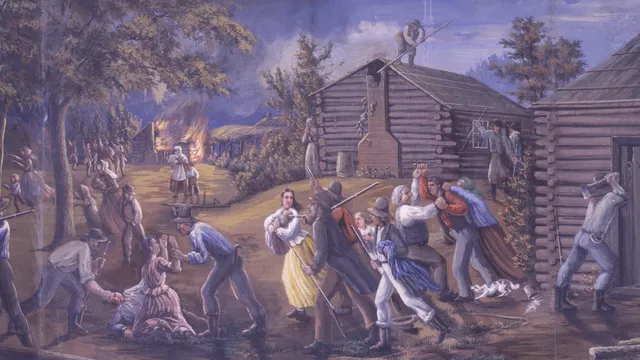
- In the early 1830s, members of The Church of Jesus Christ of Latter-day Saints faced severe persecution in Missouri, especially in Jackson County. Tensions with local settlers escalated as the Saints attempted to gather and build Zion.
Context
- By July 1833, mobs had destroyed the Church’s printing press, homes were looted and burned, and Saints were driven from their land. Many expected the Lord to intervene swiftly. Doctrine and Covenants 98 was received on August 6, 1833, before Joseph Smith knew about the full extent of the violence. Sections 99–101 followed, offering direction and comfort as the Saints grappled with displacement and suffering.
Significance
- These revelations demonstrate the Lord’s awareness of His people’s suffering, His command to forgive, and His long-term vision for Zion. The call to be patient, peacemaking, and faithful in trials was a challenging but crucial principle for the early Saints.
Takeaway
- Understanding the historical persecution the Saints endured helps us better appreciate the faith and obedience required to follow God under pressure. It invites us to trust in God’s timing during our own trials and to respond with faith rather than fear or retaliation.
Doctrine and Covenants 98 was received before Joseph Smith was aware of the violence in Missouri.
- This section provides divine counsel that anticipates the trials the Saints were already experiencing. The Lord’s words, emphasizing forgiveness, lawfulness, and patience, came at a time when emotions and tensions were high. This reinforces the idea that God prepares His people with truth and guidance ahead of time, even when they are unaware of what’s coming.
- The Lord’s call to “renounce war and proclaim peace” (D&C 98:16) was given before Joseph knew about the mob attacks, which makes the timing of the revelation even more profound. It was a preemptive spiritual framework for how to respond.
- This timing underscores the prophetic nature of revelation and the Lord’s constant awareness of His covenant people. It invites us to be spiritually prepared, trusting that God’s counsel often comes in anticipation of trials.
The concept of Zion in Section 101 emphasizes a people prepared spiritually before a physical gathering can be realized.
- Although the Saints were driven out of Jackson County, the Lord made it clear that Zion’s redemption would come “in mine own due time” (D&C 101:16). The failed establishment of Zion wasn’t due to injustice alone but also because the Saints were not fully prepared spiritually. This idea reframes the event as a divine pause rather than a permanent failure.
- The Lord explicitly says that the people “were not united according to the union required by the law of the celestial kingdom” (D&C 105:4, referenced contextually). This indicates that building Zion is not merely about gathering in one place—it’s about becoming Zion-like in heart and behavior.
- The historical attempt to establish Zion teaches us today that righteousness precedes gathering. It’s a reminder that we must build Zion within ourselves and our communities through unity, consecration, and purity before expecting the blessings of physical Zion.
If you have questions on this week’s reading, please email your questions to us here.
Apologetic Application
Criticism 1: “The persecution of the Saints in Missouri proves the Church was causing trouble.”
- Claim: “Early Church members brought persecution on themselves through arrogance or political threats.”
- Response:
- Historical Evidence: Contemporary accounts show that the Saints were often law-abiding citizens targeted for their beliefs, rapid population growth, and communal living. Missourians feared losing political control as the number of Latter-day Saints increased.
- Eyewitness Support: Eyewitnesses, including non-LDS individuals, documented the unprovoked violence, destruction of property, and forced expulsions from Jackson County.
- Spiritual Confirmation: Doctrine and Covenants 98 reaffirms that followers of Christ must respond to persecution with peace and forgiveness. The Lord uses adversity to refine and prepare His people.
- Logical Analysis: Blaming the Saints for their persecution oversimplifies a complex socio-political situation. The teachings in D&C promote peace and lawfulness, contradicting the claim that Church members were instigators.
Criticism 2: “The doctrine of Zion was used to justify conquest and taking land.”
- Claim: “LDS teachings about building Zion encouraged members to displace others.”
- Response:
- Historical Evidence: The revelations in Doctrine and Covenants consistently emphasize peace, legal redress, and avoiding conflict (see D&C 98:33–38). The Saints sought to buy land, not take it by force.
- Eyewitness Support: Church leaders like Joseph Smith urged patience, legal action, and obedience to the law even when under attack. The Saints’ petitions to government officials confirm this peaceful intent.
- Spiritual Confirmation: Zion is repeatedly defined in scripture as the “pure in heart” (D&C 97:21), not a conquest mission. The focus is on internal transformation, not external domination.
- Logical Analysis: If conquest were the goal, revelations wouldn’t instruct members to forgive their enemies up to seventy times seven (D&C 98:40). This undermines the narrative of an aggressive land grab.
Criticism 3: “God wouldn’t allow His true church to be persecuted and expelled.”
- Claim: “The suffering in Missouri proves the Church wasn’t divinely led.”
- Response:
- Historical Evidence: Many religious movements throughout history have faced severe persecution. Early Christians, too, were expelled, imprisoned, and martyred.
- Eyewitness Support: Despite intense suffering, the Saints held firm in their faith, documenting profound spiritual experiences and testimonies during this period.
- Spiritual Confirmation: In D&C 101, the Lord explains that adversity serves a divine purpose—to purify, humble, and prepare His people for future blessings.
- Logical Analysis: Expecting a divine church to be immune from persecution contradicts scriptural precedent. Trials often affirm divine truth, as seen in the lives of prophets and apostles throughout scripture.
Practical Applications
Practical solutions for someone in faith crisis:
Respond to adversity with faith, not fear.
Action Step: When facing trials, pause to pray and read Doctrine and Covenants 101:16—“Be still and know that I am God.”
Why it helps:
This scripture invites us to step back from panic and trust in the Lord’s eternal plan. When we respond to difficulty with faith, we receive peace and direction instead of becoming overwhelmed by fear.
How to do it:
- – When you feel anxious or under pressure, pause and take a few deep breaths.
- – Open your scriptures and read D&C 101:16 slowly and thoughtfully.
- – Offer a short prayer, asking for help to trust in God’s timing and wisdom.
- – Write down any impressions or peaceful thoughts that come.
Encouraging Thought:
“Fear not what man can do, for God shall be with you forever and ever.” (D&C 122:9)
Forgive others to invite peace into your life.
Action Step: Follow the Lord’s counsel in D&C 98:39–40 and intentionally forgive someone who has wronged you.
Why it helps:
Forgiveness frees you from the burden of anger and allows the Spirit to heal your heart. It’s not about condoning the offense—it’s about choosing peace and following Christ’s example.
How to do it:
- – Identify a situation or person you haven’t fully forgiven.
- – Pray and ask for the strength to forgive sincerely.
- – Write down what you’ve learned or how you’ve grown from the experience.
- – Let go of the grudge and choose to move forward in peace.
Encouraging Thought:
- “He that forgiveth not his brother… condemned before the Lord.” (D&C 64:9)
Help build Zion by becoming more spiritually united with others.
- Action Step: Find one way this week to strengthen unity in your family, ward, or community.
Why it helps:
Zion isn’t just a place—it’s a people. Building Zion today means building loving, united, Christ-centered relationships that reflect celestial law.
How to do it:
- – Reach out to someone you’ve lost contact with or who may feel excluded.
- – Offer a kind word, act of service, or simple invitation.
- – Study D&C 101:3–6 and reflect on what unity looks like in your life.
- – Set a goal to contribute to Zion weekly—through kindness, inclusion, or consecration.
Encouraging Thought:
“Zion is the pure in heart.” (D&C 97:21) — Becoming Zion begins with small, intentional acts of love and unity.
Ideas for Teaching
“Be Still” — Trusting God in Chaos
Objective: Help learners understand how to find peace and trust God during trials.
Materials Needed:
A jar with water, glitter/confetti, small spoon, printed D&C 101:16, paper, and pens.
Activity Steps:
Activity Steps:
- Introduction (5 min): Shake the glitter jar and show how chaotic it looks. Ask: “Have you ever felt like this—stirred up and unsure?” Let the glitter settle while you begin.
- Scripture Discussion (5 min): Read D&C 101:16. Discuss how the Lord invites us to “be still” and know Him, even when everything feels shaken. Ask participants what that looks like practically.
- Application (5 min): Pass out paper and pens. Have everyone write down one area of their life where they need to trust God more. Invite them to fold the paper and place it in a “God’s Hands” bowl to symbolize surrender.
Follow-Up Question: What does it mean to you personally to ‘be still and know’ that He is God?
The Forgiveness Ladder
Objective: Teach the process and blessings of forgiving others as described in D&C 98.
Materials Needed:
Paper strips, tape, markers, printable steps for forgiveness (e.g., hurt, pray, understand, choose, let go, heal).
Activity Steps:
Activity Steps:
Introduction (5 min): Ask: “Why is forgiveness so hard?” Briefly share a story (or ask someone to) where forgiveness made a difference.
Scripture Discussion (5 min): Read D&C 98:39–40. Explain the Lord’s expectations and blessings of forgiving even repeated offenses.
Application (5 min): Hand out the forgiveness steps on strips of paper. As a group, tape each one up a wall like a ladder. Discuss what each step might look like in real life.
Follow-Up Question: Which step on the forgiveness ladder do you find the hardest, and why?
Build Zion in Your Circle
Objective: Inspire learners to take simple, practical steps to create unity and “Zion” in their homes and communities.
Materials Needed:
Poster board or large paper, markers, sticky notes.
Activity Steps:
Activity Steps:
Introduction (5 min): Ask: “What do you imagine when you hear the word ‘Zion’?” Record responses on the board.
Scripture Discussion (5 min): Read D&C 101:3–6 and 97:21. Discuss how Zion is both a place and a condition of the heart—being “pure in heart” and united.
Application (5 min): Give everyone a sticky note and have them write one way they can build Zion this week (e.g., show kindness, include someone, serve quietly). Place the notes around the word “ZION” on the board.
Follow-Up Question: What is one small thing you can do this week to bring Zion a little closer?
QUICK REFERENCE
Key Points
- God invites His people to be still and trust in His timing (D&C 101:16).
- Forgiveness is a divine commandment and pathway to peace (D&C 98:39–40).
- Zion is not just a place—it’s a people who are pure in heart and unified (D&C 97:21).
- Suffering and persecution can refine us and fulfill God’s purposes (D&C 101:4–5).
- The Lord’s work moves forward even when trials disrupt our expectations.
- God invites His people to be still and trust in His timing (D&C 101:16).
Core Apologetic Answers
- Why trust modern prophets?
- Modern prophets receive revelation specific to our time, offering inspired guidance just as ancient prophets did. Their teachings are consistent with eternal truths and are supported by fulfilled prophecy and practical wisdom. Doctrine and Covenants itself is evidence of living revelation responding to real, historical challenges.
- Why does God allow mistakes?
- God allows opposition and agency to help us grow and prepare for eternal life. As seen in D&C 101, He uses adversity to chasten and prepare His people for future blessings. The delay of Zion’s redemption was not a failure, but a part of divine preparation and timing.
Key Resources
Scriptures
- Doctrine and Covenants 98:11–14 – Counsel to obey and endure in faith during trials.
- Doctrine and Covenants 101:16 – “Be still and know that I am God.”
Church Documents
“The Living Christ: The Testimony of the Apostles” – A witness of Jesus Christ and modern revelation.
“The Family: A Proclamation to the World” – Principles of unity, divine roles, and eternal purpose tied to building Zion.
Online Resources
- Saints, Volume 1: The Standard of Truth – Historical insights into early persecution and revelation.
- Come, Follow Me — Doctrine and Covenants – Weekly study guidance, insights, and questions.