
No Authority Needed?
Podcast: Download (19.7MB)
Subscribe: RSS
Evangelical Questions: No Authority Needed?
by Jennifer Roach, MDiv, LMHC
Welcome back to Come Follow Me with FAIR: Faithful Answers to New Testament Questions. My name is Jennifer Roach and today we’re going to talk about Authority. As you know we’re going through the Come Follow Me readings and addressing common questions that Evangelicals ask about our faith as we go along. Our purpose here is not to fuel debate but to help you understand where your Evangelical friends and family are coming from so that you can have better conversations with them, and perhaps even be able to offer them a bit of our faith in a way they can understand.
Today’s verse comes from Luke 9:1-2:
Then he called his twelve disciples together, and gave them power and authority over all devils, and to cure diseases. And he sent them to preach the kingdom of God, and to heal the sick.
Why Authority?
A common Evangelical question that would come up here is something like: Why are Latter-day Saints obsessed with authority? In our church authority comes straight from Jesus.” And it’s interesting because there are several spots in this week’s readings, and in the readings coming up, where Jesus’ authority is questioned. People want to know under what authority he is doing this or that. And in our church we talk a lot about authority…proper authority…priesthood authority…general authorities. Who has authority to do what is an important question to us. We would say its part of how Jesus Christ has ordered his church. Evangelicals see questions of authority differently. I want to explain how they see authority and what they mean by it, so that we might see a way our church’s point of view might be thoughtful or a blessing to them.
First, I need you to set aside, just for a minute, the worry about the Bible being corrupted and translated incorrectly. Yes, those are true, but if that is your whole focus in conversation about the Bible you’re going to be butting heads with Evangelicals and not seeing a way to understand them, or to let them see the beauty in our beliefs. So, yes, there are issues in the Bible’s translation and transmission process. We will just let that sit to the side for a moment. In this video I want you to think of the parts of the Bible that are inspired, that truly show God, that are translated correctly – all the best parts of the Bible.
And this topic gets a little heady – and we need to geek out a bit to get to the point – stay with me there is a pay off, I promise.
If you’ve been following along with these videos you are starting to see that because Evangelicals hold a certain set of values, they prioritize different concepts differently.
When Evangelicals use the word “authority” it’s usually in the context of, “the authority of scripture.” And they put a lot of effort and priority into demonstrating how and why the Bible is the source of authority. They have a sincere desire to live in a way that is resisting the pull of culture (to some degree) and place themselves under the authority of scripture. This value goes all the way back to the earliest Protestant roots. At least part of what the Reformation was about was the question: Who or what gets the final say? Is it the Pope? Who?
The Reformation
Prior to the Reformation (which was not a singular event, but a process over many years) authority was contained in the Catholic Church. Few people had access to a physical Bible, few could read, and frankly few had time to devote to study as their lives were primarily about doing what needed to be done to sustain life. Leisurely sitting and studying the scriptures is not easily compatible with agrarian life. So before the Reformation the Catholic Church holds all the authority. The scriptures mean what they say it means – very few people could open up their Bible and check their work. And it wasn’t just Martin Luther who saw some of the contradictions between what the text said, and what the Catholic Church taught that the text said. Plenty of priests saw this, some were even writing about it. But it took a Martin Luther to have the courage to take the argument public. And he does it in spectacular fashion – and with excellent timing. If he had been born even 100 years earlier his argument wouldn’t have mattered much because there was no way to get scripture into the hands of average folks since the printing press had not been invented. But Luther comes along and makes a good point at a time in history when there is technology to actually apply it. And all of this is a very good thing. However, what happened when the Bible itself was given ultimate authority, and the church took a back seat. Anyone with enough education to read could access the Bible – their level of understanding the context of what they were reading didn’t matter much because the Bible itself was the ultimate authority. As long as they read with as “plain” a reading as they could, the Bible could replace the authority of the priest. This is referred to as Sola Scriptura – meaning “Scripture alone” has the final say. Today’s Evangelicals very much follow in this tradition. The idea for them is that God is the ultimate authority, and he has given us a book, therefore that book has to have authority too.
Did God come to us as a Book? Or did he send a Son?
But here’s the problem. We don’t say, “God so loved the world that he sent us a book.” That feels pretty cold, a bit lonely, kind of disconnected. We say, “God so loved the world that he sent us his son.” Sending his son came with all kinds of messiness and pain and difficulty, but the experience Jesus had while on Earth was very human so that is to be expected. It just seems odd that God would go to this great, messy length to send us a Son, and then expect those who come after that Son to be given a book to represent him and whose authority to follow, and not an actual real-live human being who can act in his authority.
We believe, as the first 1500 years of Christianity believed, that the authority to act in Christ’s name is best located in a human being who can understand the messiness of life – not in a book. Further – without even talking about the problems with translation and transmission of the Bible – all written words have to be interpreted. You have to take the written word and understand what it means. This requires a human mind. There is no bypassing this where God just dumps words straight from his mouth into your head. (Michael Ash’s book, “Rethinking Revelation: The Human Element in Scripture” is 700 pages explaining why this is true if you’re interested.) God’s project of communicating to us has to involve humans. Evangelicals want to place it in an object, a book.
What is the Authority of the Bible?
And it’s easy to see how some problems develop right away when a book is the container for God’s authority on the Earth, instead of a human being who represents him. The biggest question seems to be, How can an ancient narrative text hold authority over modern people who do not understand the culture and context from which it came?
Here is what Evangelicals do, and it’s interesting, they simply open the scripture, read what it says, and apply it to themselves. The end. Or so they think. They understand themselves to be doing a “plain reading” of scripture, and that they have within themselves all that is needed for understanding – anyone who understands differently is at best dull-minded, and at worst outright evil. But most of the Bible is not a list of things to do and things to avoid, or even a list of things to be believed. It’s a story, a narrative. And even when it lists things to be believed or things to do, those are in the context of some story. But if you can’t understand the story, you have no way to understand the do’s and don’ts. It can kind of be a grab-bag approach – just reach into the text and pull out some meaning, doesn’t really matter if it was ever intended to apply or not.
A low view of Scripture
Evangelicals then think about the Bible as something that represents God – He has placed his authority into the Bible. When they say, “authority of the Bible” it’s a kind of short-hand for, “God has authority and he has vested it into the book we call the Bible. We can turn to the Bible to learn what we need to learn.” But we think of it sort of the other-way around. And it’s the same point that NT Wright makes in some of his writing. We would say that according to the Bible itself authority is vested in God – and God gets to decide what to do with it – and the narrative of the Bible shows us, over and over, that God vests it in his representatives. To say that God now vests the authority in a book takes a complete left-turn away from where the story of the Bible is leading you. It’s actually a very low view of scripture because what it’s saying is that: God’s plan within the pages of the Bible is to cooperate with humans to do his work, but we feel ambivalent about that, so we’re going to change the plan and let God place it all in a nice neat book, not a messy human race. By taking the authority away from where God was pointing it, we disrespect him and the very book he gave us.
So what about your Evangelical friends? They want – desperately want – to get things right about God. And having everything all neat and tidy inside a book seems like a good way to do that. So they remove authority from human leaders and place it in a book. They’re trying to keep things “pure” and not let the humans mess them up. That’s an understandable desire and goal. But it’s not God’s desire. God partners with us to create, to organize, and to lead. And to remove authority from the humans God partners with, and placing that authority in a book might feel safe, but it’s not because it’s not God’s plan.
In other words, Jesus gives authority to his apostles in this story. That’s what we read in Luke 9. Evangelicals are saying, “That’s scary because humans mess things up – remember the Reformation.” And they’re not wrong. But the answer isn’t to change God’s way of operating in the world, the answer is to try and get better at following the very pattern the Bible has laid out for us – listening to God’s representatives on the Earth. The Evangelicals desperately want to have a high view of scripture. But they undermine themselves because they’re pivoting away from scripture when they place the Bible as God’s partner instead of the humans God has decided to partner with. Think of it this way, the Bible is kind of like a 5-act play…Creation, the Fall, the story of Israel, Jesus, and then the book we call, “The Acts of the Apostles,” where the gospel is taken to the ends of the Earth. And that is the stage we’re still in. We don’t call it, “The Acts of the Book.” Books don’t commit acts. They’re objects. Everything in the Bible is intended to teach us how to carry on the story of the Bible, and that includes placing authority in humans, not books.
I hope you’ve enjoyed this episode. Come back next week and we’ll look at some more.
More Come, Follow Me resources here.
 Jennifer Roach earned a Master of Divinity from The Seattle School of Theology and Psychology, and a Master of Counseling from Argosy University. Before her conversion to The Church of Jesus Christ of Latter-day Saints she was an ordained minister in the Anglican church. Her own experience of sexual abuse from a pastor during her teen years led her to care deeply about issues of abuse in faith communities.
About the Author








I think so many LDS and Protestants talk past each other because of how we conceptualize “authority” and “true religion.” Mouw gets it better than anybody.
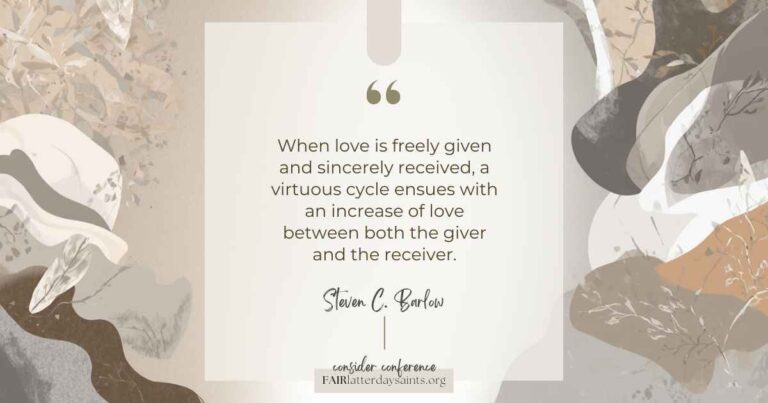
“It is important to underscore here the way in which the Mormon restoration of these ancient offices and practices resulted in a very significant departure from the classical Protestant understanding of religious authority. The subtlety of the issues at stake here is often missed by us Evangelicals, with the result that we typically get sidetracked in our efforts to understand our basic disagreements with Mormon thought. We often proceed as if the central authority issue to debate with Mormons has to do with the question of which authoritative texts ought to guide us in understanding the basic issues of life. We Evangelicals accept the Bible alone as our infallible guide while, we point out, the Latter-day Saints add another set of writings, those that comprise the Book of Mormon, along with the records of additional Church teachings to the canon- we classic Protestants are people of the Book while Mormons are people of the Books.
This way of getting at the nature of our differences really does not take us very far into exploring some of our basic disagreements. What we also need to see is that in restoring some features of Old Testament Israel, Mormonism has also restored the kinds of authority patterns that guided the life of Israel. The old Testament people of God were not a people of the Book as such- mainly because for most of their history, there was no completed Book. Ancient Israel was guided by an open canon [of scripture] and the leadership of the prophets. And it is precisely this pattern of communal authority that Mormonism restored. Evangelicals may insist that Mormonism has too many books. But the proper Mormon response is that even these Books are not enough to give authoritative guidance to the present-day community of the faithful.The books themselves are products of a prophetic office, an office that has been reinstituted in these latter days. People fail to discern the full will of God if they do not live their lives in the anticipation that they will receive new revealed teachings under the authority of the living prophets. – Richard Mouw, “What does God think about America?” BYU Studies, 43:4 (2004): 10-11.
So here’s a question for Jennifer, or anyone else who would care answer it for me. As a believing, latter-day Saint, I have always understood our church’s relationship with the idea of authority, and I think I understand where protestants and evangelicals come from in terms of authority coming from Jesus directly, or from the Bible directly. But I have never really heard a protestant or an evangelical explain to me satisfactorily why then the logical flipside is not also true; if anyone who is inspired by God can follow the Bible to their best ability and plant a church, then why doesn’t Joseph Smith have at least equal authority to do what he did as opposed to any other protestant or evangelical? Whenever I have that kind of conversation, the argument switches from the priesthood of all believers, or the authority of the Bible, to a doctrinal argumen against the doctrines that Joseph introduced, which from their perspective and validates his authority. So I am left to try to understand which argument against the church carries more weight in the mind of an evangelical or protestant. I am not trying to argue, but I’m truly trying to understand the evangelical or protestant perspective on this question; if there is a priesthood of all believers, what is it fault with the church Joseph planted in 1830? If there is an error in the doctrine Joseph introduced, what is to be said of fellow evangelicals, who may strongly disagree about doctoral issues, but still accept each other’s authority?