“He Taught Them as One Having Authority”
February 20–26

FAIR Faithful Resources for Come, Follow Me 2023 February 20–26. Matthew 6-7: “He Taught Them as One Having Authority.” Find answers to difficult questions to help you in your learning and teaching. Here is a collection of reliable resources to supplement your study of Matthew 6-7. FAIR Resources link to relevant questions which have been answered on the FAIR website. Under Church Resources you’ll find links to the different Come, Follow Me manuals, as well as other helpful links as applicable. Other Resources link to resources outside of FAIR that are trustworthy and helpful.
Main points to ponder
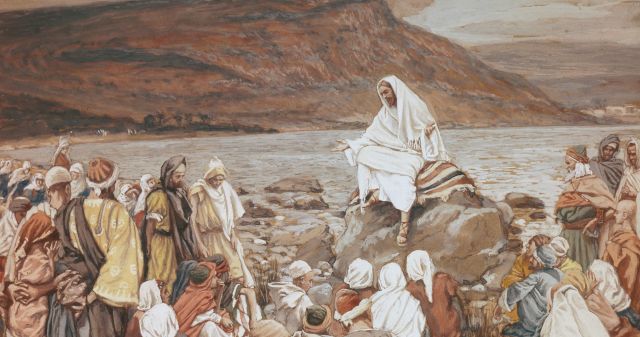
The Sermon on the Mount, Matt. 5:1–7:29 is a discourse by the Lord to His disciples who were about to be sent forth on missions. It should be placed chronologically soon after the calling of the Twelve. It is similar in many respects to a sermon recorded in Luke 6:20–49, although the Matthew account contains more pointed references to the law, the prophets, and the individual calling and responsibility of the disciples.
The Luke account appears to have a more general application. For example, “Ye are the salt of the earth” (Matt. 5:13); “Ye are the light of the world” (Matt. 5:14); and, “take no thought, saying, What shall we eat … drink? or, Wherewithal shall we be clothed” (Matt. 6:31) do not occur in the Luke account. The Sermon in Matthew is greatly clarified by the JST (compare the KJV to the JST here for Matthew 5 and here for Luke 6) and a similar sermon recorded in 3 Ne. 12–14.
Faithful Resources on the FAIR website:
- The Sermon on the Mount in the Book of Mormon
- Faith and Reason 20: “Without a Cause”
- The Corruption of Scripture in the Second Century
Resources on the Church website:
Come, Follow Me—For Individuals and Families
Come, Follow Me—For Sunday School
Lesson 9: New Testament Customs—Phylacteries
Sermon on the Mount: The Lord’s Prayer (Matthew 6:1-13)
Sermon on the Mount: Treasures in Heaven (Matthew 6:19-21; 7:1-27)
Faithful Resources from other reliable websites:
- Come, Follow Me Study and Teaching Helps — Lesson 9: February 20–26, Jonn Claybaugh
- The New Testament in Context: Come, Follow Me Lesson 9
- Audio Roundtable: Come, Follow Me New Testament Lesson 9
- Audio Roundtable: Come, Follow Me New Testament Lesson 9B
- The Strait and Narrow Path, Hales Swift
- Scripture Roundtable: New Testament Gospel Doctrine Lesson 9, “Seek Ye First the Kingdom of God”
- The Kingdom of God, Jennifer C. Lane
- The Father in the Sermon on the Mount, Jared W. Ludlow
- The Sociocultural Context of the Sermon on the Mount, Amy Blake Hardison
- Audience Astonishment at the Sermon on the Mount and the Sermon at the Temple, Valerie Triplet-Hitoto
- Echoes from the Sermon on the Mount, John W. Welch
- Come Follow Me – Matthew 6-7, Book of Mormon Central Archive
- Why Is the Lord’s Prayer Different in 3 Nephi? (KnoWhy #204)
- Understanding the Sermon on the Mount, Messages of Christ
- Learning from the Lord’s Prayers, Messages of Christ
- Come Follow Me 2019: Matthew 6-7, Book of Mormon Central
- Come, Follow Me, February 25–March 3; Matthew 6–7, BYU Studies
The Sermon on the mount talks about prayer. What teachings in Matthew 6–7 inspire you to improve how you pray? What are “vain repetitions”? Consider Alma 31:12–23.
In Matthew 7:1, the Savior may seem to be saying we should never judge, but in other scriptures (including other verses in this chapter), He gives us instructions about how to judge. If that seems puzzling, the Joseph Smith Translation of this verse might help: “Judge not unrighteously, that ye be not judged; but judge righteous judgment” (in Matthew 7:1, footnote a). What do you find in Matthew 7:1–5, along with the rest of the chapter, that helps you know how to “judge righteous judgment”?
See also Gospel Topics, “Judging Others,” topics.ChurchofJesusChrist.org; Lynn G. Robbins, “The Righteous Judge,” Ensign or Liahona, Nov. 2016, 96–98.
The phrase “I never knew you” in Matthew 7:23 was changed in the Joseph Smith Translation to “Ye never knew me” (Matthew 7:23, footnote a). How does this change help you better understand what the Lord taught in verses 21–22 about doing His will? How well do you feel you know the Lord? What can you do to know Him better?
See also David A. Bednar, “If Ye Had Known Me,” Ensign or Liahona, Nov. 2016, 102–5.
Living the gospel doesn’t remove adversity from our lives. Both houses in the Savior’s parable in Matthew 7:24–27 experienced the same storm. But one of the houses was able to withstand it. How has living the Savior’s teachings created a solid foundation for you? What do you feel inspired to do to continue building your “house upon a rock”? (see verse 24).
See also Helaman 5:12.

Faithful Resources Faithful Resources Faithful Resources Faithful Resources Faithful Resources Faithful Resources Faithful Resources
Faithful Resources Faithful Resources Faithful Resources Faithful Resources Faithful Resources Faithful Resources Faithful Resources Faithful Resources Faithful Resources Faithful Resources Faithful Resources Faithful Resources Faithful Resources Faithful Resources Faithful Resources Faithful Resources Faithful Resources Faithful Resources Faithful Resources