"Thy Faith Hath Saved Thee"
February 27-March 5

FAIR Faithful Resources for Come, Follow Me 2023 February 27-March 5. Matthew 8; Mark 2–4; Luke 7 “Thy Faith Hath Saved Thee.” Find answers to difficult questions to help you in your learning and teaching. Here is a collection of reliable resources to supplement your study of Matthew 1 and Luke 1. FAIR Resources link to relevant questions which have been answered on the FAIR website. Under Church Resources you’ll find links to the different Come, Follow Me manuals, as well as other helpful links as applicable. Other Resources link to resources outside of FAIR that are trustworthy and helpful.
Main points to ponder
Miracles
An important element in the work of Jesus Christ, being not only divine acts, but forming also a part of the divine teaching. Christianity is founded on the greatest of all miracles, the Resurrection of our Lord. If that be admitted, other miracles cease to be improbable. Miracles should not be regarded as deviations from the ordinary course of nature so much as manifestations of divine or spiritual power. Some lower law was in each case superseded by the action of a higher. They were intended to be a proof to the Jews that Jesus was the Christ (Matt. 11:4–5; John 2:11; 10:25; 20:30–31). Many of them were also symbolic, teaching such divine truths as the result of sin and the cure of sin; the value of faith; the curse of impurity; and the law of love. The miracles of healing also show how the law of love is to deal with the actual facts of life. Miracles were and are a response to faith and its best encouragement. They were never wrought without prayer, felt need, and faith.
Consider as you read: What does the account teach about faith in Jesus Christ? What does the account teach about the Savior? What does God want me to learn from this miracle? Here are some examples, but there are many more:
- A leper (Matthew 8:1–4)
- A centurion’s servant (Matthew 8:5–13; Luke 7:1–10)
- Peter’s mother-in-law (Matthew 8:14–15)
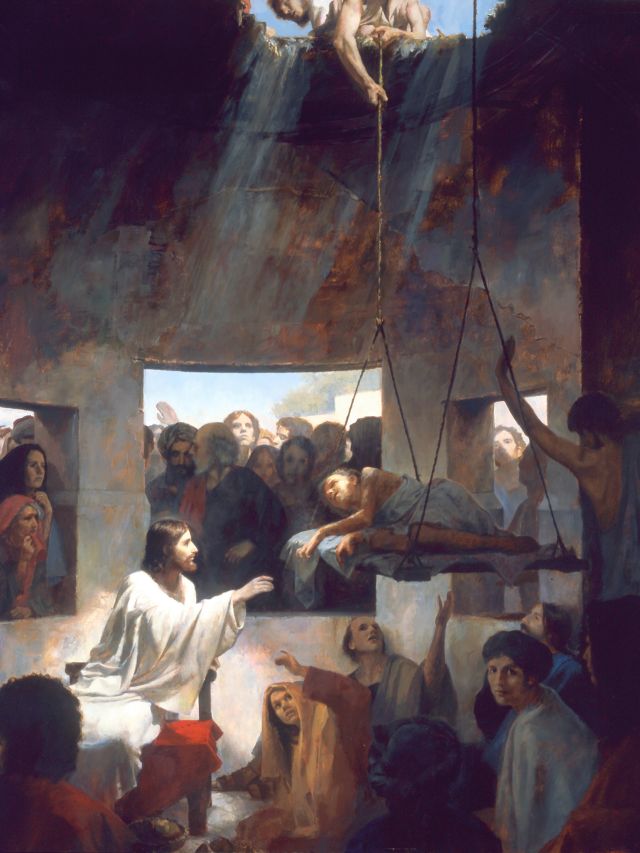
- A man sick with palsy (Mark 2:1–12)
- A man with a withered hand (Mark 3:1–5)
- The son of the widow of Nain (Luke 7:11–16)
See also David A. Bednar, “Accepting the Lord’s Will and Timing,” Ensign, Aug. 2016, 29–35, or Liahona, Aug. 2016, 17–23; Neil L. Andersen, “Wounded,” Ensign or Liahona, Nov. 2018, 83–86.
Faithful Resources on the FAIR website:
- Question: Why doesn’t God always heal the sick when they are given priesthood blessings?
- Question: How do Mormons view miracles in other faiths?
- Question: How do Mormons see the relationship between works and grace?
- Question: Does the Bible teach that individual works are unnecessary?
- Question: How can one view contradictions in Scripture in a faithful way?
Resources on the Church website:
Come, Follow Me—For Individuals and Families
Come, Follow Me—For Sunday School
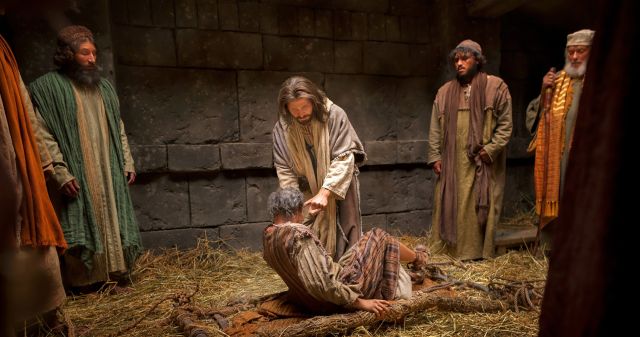
Jesus Forgives Sins and Heals a Man Stricken with Palsy (Mark 2:1-12)
Jesus Raises the Daughter of Jairus (Mark 5:22-24, 35-43)
Jesus Heals a Woman of Faith (Mark 5:22-43)
Faithful Resources from other reliable websites:
- Follow Him: Dr. Joshua M. Sears “THY FAITH HATH SAVED THEE” Part I, Part 2, Youth
- The Scriptures are Real Christ and the Pharisees Roundtable Part 1, Christ and the Pharisees Roundtable Part 2
- Who were the Sadducees and the Pharisees?
- Come, Follow Me Study and Teaching Helps — Lesson 10: February 27–March 5, Jonn Claybaugh
- The New Testament in Context: Come, Follow Me Lesson 10
- Audio Roundtable: Come, Follow Me New Testament Lesson 10
- I Can Defend My Beliefs by Teaching True Principles, Hales Swift
- Scripture Roundtable: New Testament Gospel Doctrine Lesson 7, “[He] Took Our Infirmities, and Bare Our Sicknesses”
- Matthew 11 and Luke 7, 11-13. Coming Unto Christ and Learning of Him, Taylor Halverson
- The Gospel of Mark with Julie Smith
- Come Follow Me – Matthew 8-9; Mark 2-5, Book of Mormon Central Archive
- The Healing Touch and the Woman with an Issue of Blood, Messages of Christ
- Our Savior in the Gospels: “Thy Faith Hath Made Thee Whole”
- Come Follow Me 2019: Matthew 8–9; Mark 2–5, Book of Mormon Central
- The Healing Touch and the Woman with an Issue of Blood, Messages of Christ
- Matthew 8–9; Mark 2–5, BYU Studies
- Tyler Griffin & Taylor Halverson Matthew 8; Mark 2–4; Luke 7 | Feb 27-Mar 5 | Come Follow Me Insights
- Lynne Hilton Wilson Matt 8, Mark 2-4, Luke 7: New Testament with Lynne Wilson (Come, Follow Me)
- Teaching Tips for Come Follow Me | Feb 27-Mar 5 | Matthew 8; Mark 2–4; Luke 7
- Messages of Christ What Would Jesus Do?
- Messages of Christ Jesus and the Sinful Woman
- Messages of Christ The Widow of Nain
- Kent Brown Through the Night to Nain (Come, Follow Me: Luke 7)
- John Hilton III Jesus Heals the Son of the Widow of Nain, Jesus and the Anointing Woman in Luke, Jesus Heals a Paralytic Brought Down from the Roof, Jesus Stills a Storm, The Parable of the Sower (Come, Follow Me: Mark 4)
Faithful Resources Faithful Resources Faithful Resources Faithful Resources Faithful Resources Faithful Resources Faithful Resources Faithful Resources Faithful Resources Faithful Resources Faithful Resources Faithful Resources Faithful Resources Faithful Resources Faithful Resources Faithful Resources Faithful Resources Faithful Resources Faithful Resources Faithful Resources Faithful Resources Faithful Resources Faithful Resources Faithful Resources Faithful Resources Faithful Resources
Pharisees
A religious party among the Jews. The name denotes separatists. They prided themselves on their strict observance of the law and on the care with which they avoided contact with things gentile. Their belief included the doctrine of immortality and resurrection of the body and the existence of angels and spirits. They upheld the authority of oral tradition as of equal value with the written law. The tendency of their teaching was to reduce religion to the observance of a multiplicity of ceremonial rules and to encourage self-sufficiency and spiritual pride. They were a major obstacle to the reception of Christ and the gospel by the Jewish people. For the Lord’s judgment on them and their works see Matt. 23; Mark 7; Luke 11:37–54.
Sadducees
A party or caste among the Jews. The name is probably derived from Zadok, the high priest in Solomon’s time. The party consisted of old high-priestly families who came to the front during the Maccabean war. They formed the Jewish aristocracy and were powerful, though quite small in numbers. In their treatment of religious questions they held to the letter of the Mosaic revelation and denied the authority of ancient tradition; they taught complete freedom of the will in moral action; they were opposed to the Pharisees as to the belief in angels and spirits; they refused also to accept the doctrine of immortality as a necessary part of the Jewish faith. It was through their influence that Greek culture spread in Israel. Their opposition to our Lord was the result of His action in cleansing the temple, which they regarded as an infringement of their rights. They opposed the work of the Apostles because they preached the Resurrection (Acts 4:1–3; 23:7–8; see also Mark 12:18–27).
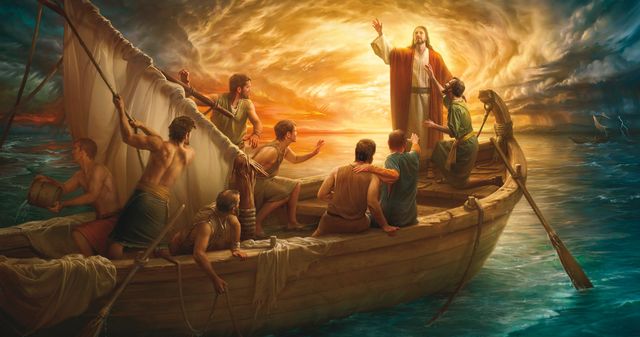
Have you ever felt the way Jesus’s disciples did in the storm at sea—watching the waves of water fill the boat and questioning, “Master, carest thou not that we perish?”
In Mark 4:35–41, you will find four questions. List each one, and ponder what it teaches you about facing life’s challenges with faith in Jesus Christ. How does the Savior bring peace to the storms of your life?
See also Lisa L. Harkness, “Peace, Be Still,”