“An High Priest of Good Things to Come”
November 6–12

FAIR Faithful Resources for Come, Follow Me 2023 November 6–12. Hebrews 7–13: “An High Priest of Good Things to Come.” Find answers to difficult questions to help you in your learning and teaching. Here is a collection of reliable resources to supplement your study of Hebrews 7–13. FAIR Resources link to relevant questions which have been answered on the FAIR website. Under Church Resources you’ll find links to the different Come, Follow Me manuals, as well as other helpful links as applicable. Other Resources link to resources outside of FAIR that are trustworthy and helpful.
Main points to ponder
The lesson invites us to develop our own, individual definition of faith as we ponder ideas found in Hebrews 11. Consider the following sources as you define faith for yourself:
- Hebrews 11
- “Seeing the Promises Afar Off,” Sister Anne C. Pingree
- Ether 12:6–22
- Hebrews 11:13
- Alma 32:21, 26–43
- “An High Priest of Good Things to Come,” Jeffrey R. Holland
- Faith in Jesus Christ, Gospel Topics
- Question: Why do Mormons use the Aaronic Priesthood, since Hebrews 7 states that the Aaronic/Levitical Priesthood was “changed” to the unique priesthood “after the order of Melchizedek” held by Jesus Christ?
- Question: Was the priesthood held by Jesus priesthood not ‘transferable’ to members of the Church?
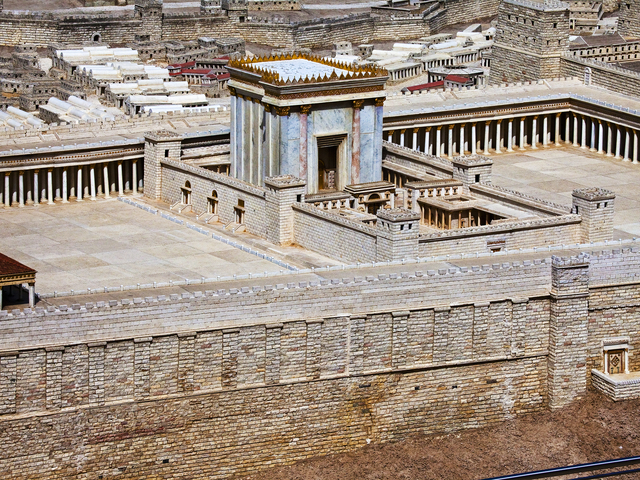
- Question: Was the temple obsolete after Christ?
- Question: Was the Gospel of Christ a mystery that was unknown until the advent of Christ?
- Question: How could Joseph Smith have seen God if the Bible says that God cannot be seen by mortals?
- Faith is Not Blind
- “Believest thou…?”: Faith, Cognitive Dissonance, and the Psychology of Religious Experience
Come Follow Me for Individual Study: November 6–12. Hebrews 7–13: “An High Priest of Good Things to Come”
Come Follow Me for Sunday School: November 6-12. Hebrews 7-13: Sunday School
Come Follow Me for Primary: November 6–12. Hebrews 7–13: “: Primary
- Substance of Faith (Hebrews 11)
- Bible Dictionary: About Melchizedek
- Gospel Topics: Melchizedek Priesthood
- BYU Scripture Roundtable Discussions: A More Excellent Ministry: Heb. 8-10, 12-13
- Come, Follow Me Study and Teaching Helps — Lesson 46: November 6–12, Jonn Claybaugh
- The New Testament in Context: Come, Follow Me Lesson 46
- Audio Roundtable: Come, Follow Me New Testament Lesson 44 (Hebrews 7-13)
- Christ as the Mediator of the New Testament (Hebrews 9), Hales Swift
- Scripture Roundtable: New Testament Gospel Doctrine Lesson 37, Jesus Christ: “The Author and Finisher of Our Faith”
- Seek Learning by Faith, David A. Bednar
- How the Dead Sea Scrolls Shed Light on Similarities Between Hebrews and the Book of Mormon, Book of Mormon Central
- Come Follow Me – Hebrews 7-13, Book of Mormon Central Archive
- The Acts to Revelation, Discussions on the New Testament: Heb. 3-5 & 7
- The Acts to Revelation, Discussions on the New Testament: Heb. 8-10, 12-13
- The Acts to Revelation, Discussions on the New Testament: Heb. 11; James 2
- Come Follow Me 2019: Hebrews 7-13, Book of Mormon Central
- Come Follow Me Hebrews 7-13 (Nov. 11-17), Don’t Miss This
- Come Follow Me Podcast #44—“An High Priest of Good Things to Come”, Hebrews 7-13, Meridian Magazine
- Hebrews 7 to 13 – “An High Priest of Good Things to Come”, BYU Studies
- Tyler Griffin & Taylor Halverson: Hebrews 7–13 | Nov 6 – Nov 12 | Come Follow Me Insights
- Lynne Hilton Wilson: Hebrews 7-13: New Testament with Lynne Wilson (Come, Follow Me)
- Messages of Christ: Understanding the Day of Atonement or Yom Kippur
- Messages of Christ: The Tabernacle and the Messiah
- John Hilton III: The Veil of the Temple Represents Jesus (Come, Follow Me: Hebrews 10)
- Follow Him Podcast Hebrews 7-13 Part 1 • Dr. Philip Allred • Nov 6 – Nov 12 • Come Follow Me
- Follow Him Podcast Hebrews 7-13 Part 2 • Dr. Philip Allred • Nov 6 – Nov 12 • Come Follow Me
- Unshaken Come Follow Me – Hebrews 7-13 (part 1): High Priest of Good Things to Come
- Unshaken Come Follow Me – Hebrews 7-13 (part 2): Author & Finisher of Our Faith
- BibleProject: Hebrews
Be sure to listen to Jennifer Roach’s presentation for this week!
- General Conference Talks
- Elder Jeffrey R. Holland: “An High Priest of Good Things to Come”
- President Dallin H. Oaks: The Melchizedek Priesthood and the Keys
- Sister Anne C. Pingree: Seeing the Promises Afar Off
- BYU Devotionals
- President (then Elder) Russell M. Nelson: Jesus the Christ—Our Master and More | Russell M. Nelson | Speeches
Lesson Devotional
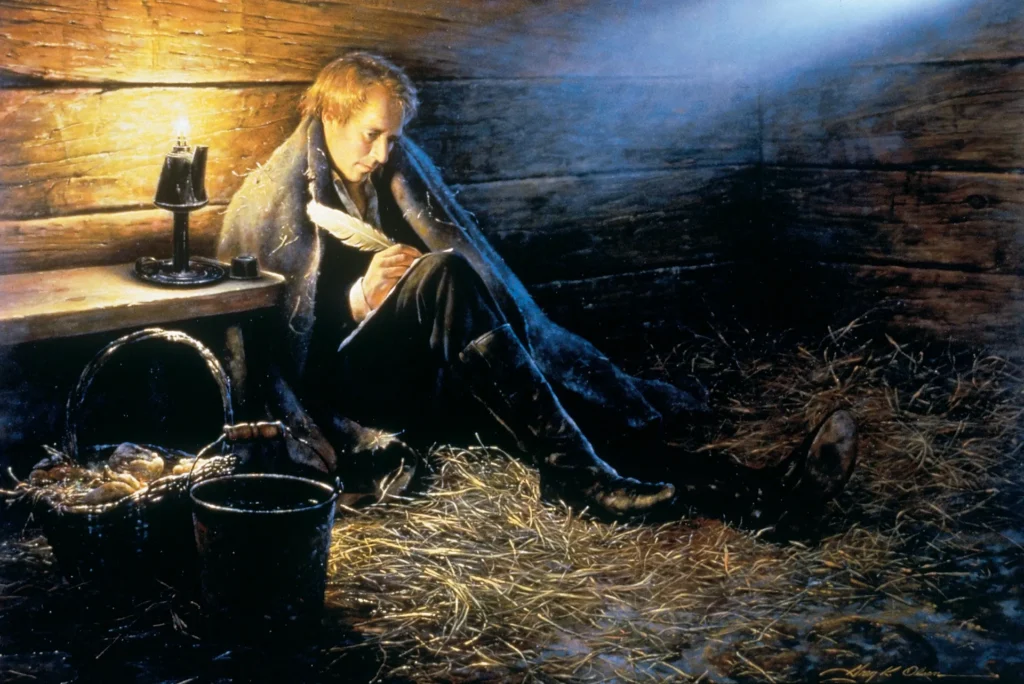
Craig Lindquist is an active member of The Church of Jesus Christ of Latter-day Saints. He is a father, grandfather, and great-grandfather, happily married to Dianna for the past 46 years. By trade he is a cabinetmaker, actor, and writer. He lives in Henderson, Nevada, except when he travels to film or to work on the construction of temples.

Lesson devotionals are provided by the Wilford Woodruff Papers Foundation. Its mission is to digitally preserve and publish Wilford Woodruff’s eyewitness account of the Restoration of the gospel of Jesus Christ from 1833 to 1898. It seeks to make Wilford Woodruff’s records universally accessible to inspire all people, especially the rising generation, to study and to increase their faith in Jesus Christ. See wilfordwoodruffpapers.org.
“Good Things to Come”
By Craig Lindquist
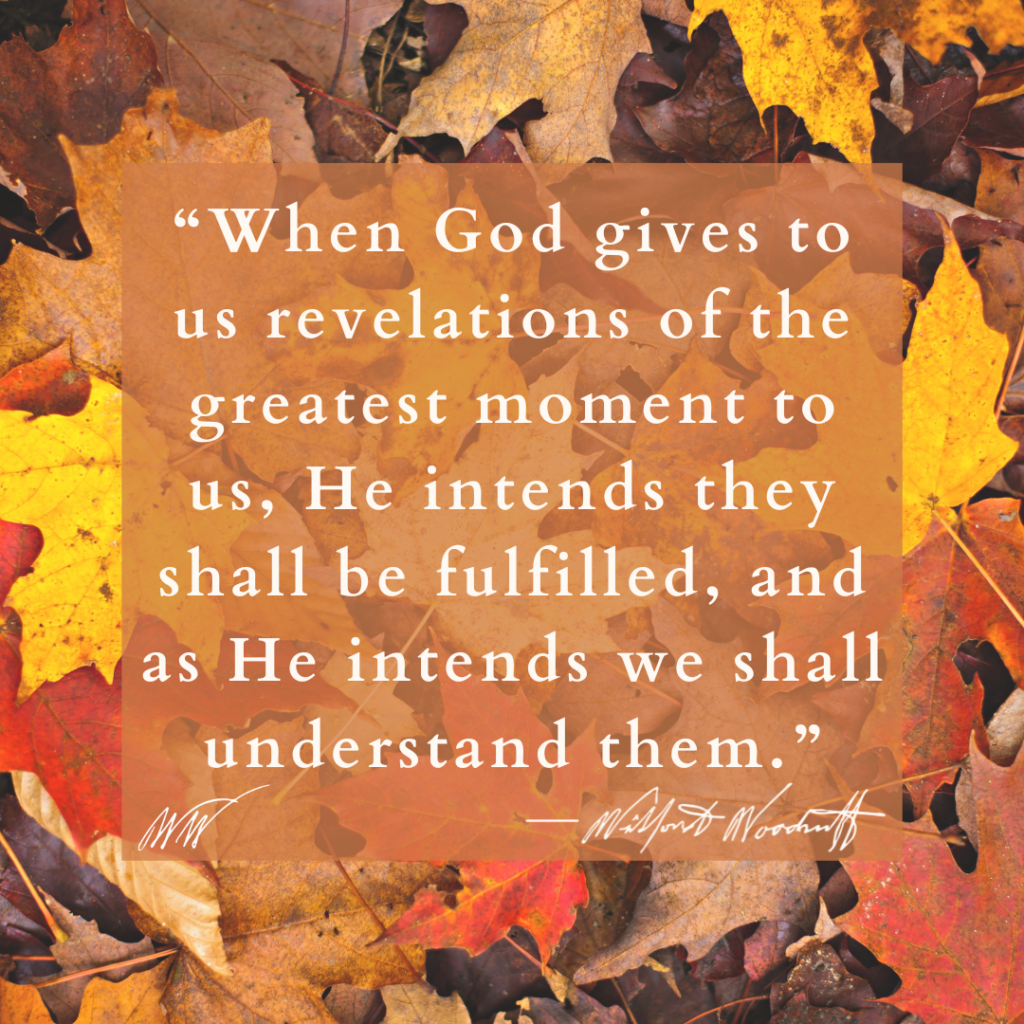
“We have now learned that God means what He says, and says what He means. . . . When He gives to us revelations of the greatest moment to us, will He not set forth His mind and will in their true meaning, as He intends they shall be fulfilled, and as He intends we shall understand them?”1
So taught Wilford Woodruff as he addressed the Saints in 1855, many of whom still carried troubling memories of the exodus from Nauvoo. It can be difficult at times to keep our eyes focused on eternal things when the fiery darts of the adversary come at us on a regular basis (see 1 Nephi 15:24). We might ask, as Brother Joseph did while languishing in a jail cell, “O God, where art thou? And where is the pavilion that covereth thy hiding place?” (Doctrine and Covenants 121:1).
God’s tender answer to Joseph can be as pertinent for us as it was for him. “My son, peace be unto thy soul; thine adversity and thine afflictions shall be but a small moment” (Doctrine and Covenants 121:7).
Can you hear your Father above whispering to you and confirming this truth? It is as Wilford taught—God means what He says! He has promised us that our trials and difficulties will not last forever. He wants us to believe Him and understand Him. He also wants us to know that this life is meant to be challenging, for a sacred purpose. Before the first mortal man stepped foot on this earth, Christ stood among His faithful disciples and said, “We will prove them herewith, to see if they will do all things whatsoever the Lord their God shall command them” (Abraham 3:25).
We are learning through our difficulties to become more like Christ. The Apostle Paul called Jesus “an high priest of good things to come” (Hebrews 9:11). And what are those “good things”? Christ taught of the faithful sons and daughters of God, “They are they into whose hands the Father has given all things—they are they who are priests and kings, who have received of his fulness, and of his glory. . . . They are gods, even the sons of God—Wherefore all things are theirs . . . And they shall overcome all things” (Doctrine and Covenants 76:55–60). Is this not the grandest, most majestic promise ever given?
It is necessary for us to know these promises and see glimpses into the future that awaits God’s faithful children so we can know why we are here and why we endure. Even Jesus needed to be able to see joy and hope during His trials, as taught by Paul: “Looking unto Jesus the author and finisher of our faith; who for the joy that was set before him, endured the cross” (Hebrews 12:2). It is the same for us. Father wants us home. He has set forth His mind and will to us about the scriptures’ true meaning. Now we must choose to believe, choose to seek for understanding, and choose to look forward to the good things to come.
1 Discourse by Wilford Woodruff, February 25, 1855, p. 2, The Wilford Woodruff Papers, wilfordwoodruffpapers.org/discourse/1855-02-25.
Chapter Summaries
The Melchizedek Priesthood brings exaltation and administers the gospel—It is received with an oath and covenant—The superiority of the Melchizedek Priesthood over the Aaronic Priesthood is explained—Salvation comes through the intercession of Christ.
1-28: The mission of Melchizedek is described. The function of the sons of Levi, as priests in ancient tabernacles is described. Paul then shows how Jesus, from the tribe of Judah, perfectly fulfills the both the mission of Melchizedek and the Levite priests due to his sinless and eternal nature. He saves us, cleanses us and brings us back into the presence of God.
Christ offered Himself as a sacrifice for sin—God promised to make a new covenant with Israel.
1-13: The author compares Jesus to the Levite priests who were intercessors in the tabernacle, but Jesus is our intercessory in a heavenly tabernacle. The ancient tabernacle was always a type and shadow of what was to come. We may be partakers of the new covenant offered to us by God, because Jesus offered himself as a sinless sacrifice on our behalf.
The Mosaic ordinances prefigured Christ’s ministry—Christ is the Mediator of the new covenant.
1-28: More on how the ancient tabernacle was a type of Christ’s final sacrifice. For ancient Israel, blood was used to cleanse and purify. The High Priest offered a yearly sacrifice of blood to cleanse and purify the people. However, Christ became the final High Priest, whose blood atoned for the sins of all people once and for all.
We are sanctified by the shedding of the blood of Christ—The superiority of His sacrifice is explained—Those who fall from grace through willful sin are damned—The just will live by faith.
1-18: The author continues to use the example of the old covenant as a shadow of the mission of Jesus. Sacrifices in the ancient tabernacle happened daily, but Jesus’ death was the final sacrifice required to bring salvation to all. (see v. 10)
19-39: Using more temple imagery, the author says that since Christ has become the veil through which we pass to enter the presence of God, let us take advantage of this opportunity and blessing. Let us draw near to God, to hold on to hope, to love and encourage others and shun sin. Though you may face persecution now, it is better to suffer that than to let your faith in Jesus wane.
By faith we understand the word and work of God—The faith of the ancients was centered in Christ—By faith, men subdued kingdoms, wrought righteousness, and worked miracles.
1-29: Beautiful examples of faith are portrayed throughout Old Testament history. The chapter ends with examples from unnamed individuals whose faith in some cases led to miracles, but in other cases helped them to overcome persecution and adversity.
Whom the Lord loves He chastens—God is the Father of spirits—To see God, follow peace and holiness—Exalted Saints belong to the Church of the Firstborn.
1-3: Let us follow in the footsteps of the faithful described in chapter 11 and run with joy the race set before us, with our eyes fixed on Jesus.
4-17: In both hardships and the repentance process necessary from sin, know that God loves us and hopes these negative experiences to be for our gain. Live in peace with others and help them along their Christian journey.
18-28: Don’t be like the Israelites, who feared to approach God on Mt. Sinai. Instead, come with confidence and joy “ . . . unto mount Sion, and unto the city of the living God, the heavenly Jerusalem, and to an innumerable company of angels. . . and to God the Judge of all . . .And to Jesus the mediator of the new covenant.” (v22-24) As we accept the new covenant and draw near to Him we become part of an unshakeable kingdom.
Marriage is honorable—Christ is the same everlastingly—Paul explains how the Saints are to offer acceptable sacrifices.
1-24: Some last admonitions for living a Christian life, including loving of neighbors, sanctity of marriage, dangers of materialism, support of leaders, avoiding deception and a final testimony of Jesus as the redeemer.
20-25: Final blessing and farewell
Faithful Resources, and Faithful Resources. Also, Faithful Resources therefore Faithful Resources. But without Faithful Resources you’ll need Faithful Resources; because Faithful Resources help. Twelve apostles give Faithful Resources, therefore Faithful Resources abound. Since Faithful Resources at Faithful Resources then Faithful Resources because Faithful. Resources at Faithful Resources as Faithful Resources are Faithful Resources therefore Faithful Resources. Again, Faithful Resources Faithful Resources Faithful Resources Faithful Resources Faithful Resources Faithful Resources Faithful Resources. Since Faithful Resources then Faithful Resources. Mormon. Mormon Church. Ex-mo.