FAIR › Scripture Study Resources: Supplement Your Come, Follow Me Study › Study Resources for the Doctrine & Covenants and Church History › Week 14 He Will Swallow Up Death in Victory
Easter

Doctrinal Focus
- Key doctrines addressed in this week’s reading
Jesus Christ overcame death and offers eternal life to all.
Through His Resurrection, Jesus Christ conquered both physical and spiritual death for all mankind.
Isaiah prophesied that the Lord would “swallow up death in victory” (Isaiah 25:8), and the New Testament confirms that Christ’s victory over the grave is universal (1 Corinthians 15:20–22). Because of Him, every person will be resurrected, and those who follow Him faithfully will inherit eternal life in the presence of God.
Christ’s Resurrection is the ultimate evidence of His divine Sonship and power to redeem.
The empty tomb stands as a witness that Jesus is “the Resurrection, and the Life” (John 11:25). His triumph over death assures believers that faith in Him leads to hope beyond mortality and strength to endure life’s trials with confidence in God’s plan.
Jesus Christ offers a peace that the world cannot give.
The Savior’s peace comes through trust in His atoning power and submission to His will.
In John 14:27, Christ declares, “Peace I leave with you, my peace I give unto you: not as the world giveth.” His peace transcends circumstances, quieting fear and turmoil when we center our hearts on Him rather than on worldly solutions.
The Holy Ghost conveys the peace of Christ to His disciples.
As we live worthily and keep the Savior’s commandments, the Spirit brings assurance, calm, and direction (John 14:26–27). This divine companionship enables disciples to face hardship with courage and to minister that same peace to others.
Through Jesus Christ, sorrow is transformed into lasting joy.
The Resurrection and Atonement turn mortal sorrow into eternal rejoicing.
- The Savior taught, “Ye shall be sorrowful, but your sorrow shall be turned into joy” (John 16:20). His victory over sin and death ensures that every loss, pain, or separation can be made whole in Him.
Joy in Christ is deeper and more enduring than worldly happiness.
- True joy is a divine gift that flows from covenant faithfulness and the assurance of God’s love. As President Nelson and The Living Christ testify, this joy is possible because Jesus “lives,” guiding His followers through life’s darkness toward everlasting light.
Historical & Contextual Insights
- Insights in this week’s study
Setting
- The scripture block spans both the Old and New Testaments—Isaiah’s prophecy centuries before Christ and the Savior’s final mortal days with His disciples in Jerusalem. These teachings occur during the last week of Jesus’s life, often referred to as the Passion Week, culminating in His Atonement, death, and Resurrection.
Context
Isaiah foretold a time when the Lord would “swallow up death in victory,” offering hope to ancient Israel amid political instability and mortal despair. Centuries later, Jesus fulfilled that prophecy through His suffering in Gethsemane, His Crucifixion on Calvary, and His Resurrection from the Garden Tomb. In the upper room, He comforted His apostles with promises of peace and the Holy Ghost, even as betrayal and death loomed.
Significance
- Understanding this historical backdrop deepens appreciation for the reality of Christ’s divine mission. His words of comfort were not abstract ideals—they were spoken in the shadow of imminent suffering. The apostles’ eventual witness of His Resurrection transformed fear into faith and ignited the early Christian movement.
Takeaway
- Recognizing this historical moment helps modern disciples trust the Savior’s promises even amid uncertainty. Just as His followers found peace and courage in the darkest hours, we too can find assurance that His victory over death is real and personal.
Jesus’s promise of peace in John 14:27 was given on the eve of His betrayal and death.
- When Jesus said, “Peace I leave with you, my peace I give unto you,” He was preparing His disciples for His physical departure. This was not a moment of calm circumstances but one of approaching chaos. Yet He offered a peace independent of circumstance—a divine assurance born from His foreknowledge of the Resurrection.
- The timing makes this promise especially powerful: the Savior’s peace is not the absence of conflict, but the presence of faith and trust in God’s plan even during crisis.
- His words invite believers to seek spiritual steadiness through covenant connection rather than worldly stability. The “peace not as the world giveth” is thus an enduring spiritual gift accessible through discipleship and the Holy Ghost.
Isaiah’s prophecy that the Lord would “swallow up death in victory” (Isaiah 25:8) foreshadowed both the universal Resurrection and the personal hope that Christ would bring.
- In Isaiah’s era, death was viewed as an inescapable end, but the prophet envisioned a future where the Lord would permanently destroy its power. This imagery of “swallowing up” suggests total triumph, later realized through Jesus Christ’s Resurrection—transforming human understanding of mortality and eternal life.
- Paul later echoed this prophecy in 1 Corinthians 15:54–57, declaring death “swallowed up in victory” through Christ, linking ancient prophecy to fulfilled reality. The continuity testifies of God’s unchanging plan of salvation.
- For modern believers, this assurance redefines death as a transition rather than an end. It transforms grief into hope, anchoring faith in the living Christ who has overcome every form of loss.
If you have questions on this week’s reading, please email your questions to us here.
Apologetic Application
Criticism 1: “The Resurrection of Jesus is only a myth or metaphor.”
- Claim: “Jesus’s followers invented the Resurrection story to preserve His teachings.”
- Response:
- Historical Evidence: Ancient sources—including Paul’s letters (1 Corinthians 15:3–8) written within decades of Christ’s death—record over 500 witnesses who saw the risen Lord. The early creed embedded in that passage predates Paul’s ministry, showing that belief in a literal Resurrection began immediately after the Crucifixion.
- Eyewitness Support: All four Gospels independently affirm that the tomb was empty and that Jesus appeared physically to His disciples, allowing them to see and touch Him (Luke 24:39). Their consistent testimony across diverse locations and audiences indicates firsthand experience, not legend.
- Spiritual Confirmation: The Holy Ghost continues to bear witness of the living Christ (John 14:26). Millions today feel the same confirming peace the early Saints described—spiritual evidence that complements historical testimony.
- Logical Analysis: If the Resurrection were fabricated, the apostles had no motive to die for a known lie. Their unwavering declarations under persecution affirm that they sincerely witnessed and believed in the risen Savior.
Criticism 2: “Christ’s peace is only emotional comfort, not a divine gift.”
- Claim: “The peace believers feel is psychological, not spiritual.”
- Response:
- Historical Evidence: Jesus promised His peace specifically through the Holy Ghost (John 14:26–27). Early Christian writings describe this peace as transformative—empowering believers to face death and persecution with calm assurance.
- Eyewitness Support: The apostles themselves demonstrated this peace after Pentecost, boldly preaching despite imprisonment and danger (Acts 4–5). Their behavior reflected supernatural strength, not mere positive thinking.
- Spiritual Confirmation: Countless modern disciples testify of a peace that transcends logic and circumstance. It arises not from denial of hardship but from the companionship of the Spirit, which Jesus Himself promised.
- Logical Analysis: Emotional calm can waver under pressure; divine peace sustains even in suffering. The enduring faith of millions across centuries supports Christ’s claim that His peace is “not as the world giveth.”
Criticism 3: “Prophecies like Isaiah 25:8 were written or edited after Christ to make them seem fulfilled.”
- Claim: “The Old Testament prophecies about the Resurrection are retroactive fabrications.”
- Response:
- Historical Evidence: The Great Isaiah Scroll from the Dead Sea Scrolls—dated more than a century before Christ—contains Isaiah 25:8 in its current form, confirming that this prophecy predated Jesus.
- Eyewitness Support: Both Paul (1 Corinthians 15:54) and early Christians recognized this passage as fulfilled prophecy, showing continuity between Jewish scripture and Christian witness.
- Spiritual Confirmation: The Spirit affirms that prophecy and fulfillment flow from the same divine source. The harmony between ancient promises and Christ’s Resurrection reveals God’s consistent plan of redemption.
- Logical Analysis: A post-Christ editing theory cannot account for textual evidence predating the New Testament. The prophetic accuracy of Isaiah supports divine foreknowledge rather than human invention.
Practical Applications
Practical solutions for someone in faith crisis:
Place your faith in the Savior’s Resurrection to replace fear with hope.
Action Step: When facing grief, uncertainty, or loss, consciously recall Christ’s victory over death and express gratitude for eternal life through prayer.
Why it helps:
Remembering the Resurrection reframes every trial. It reminds us that pain and death are temporary, that love and relationships endure, and that the Savior’s triumph is personal as well as universal.
How to do it:
- – Read Isaiah 25:8 and 1 Corinthians 15:54–57 aloud, personalizing the promise (“He will swallow up my death in victory”).
- – Write in your journal one fear or loss that Christ has helped—or can help—you overcome.
- – Bear testimony (even privately in prayer) that Jesus lives and will make all things whole.
Encouraging Thought:
Because He lives, all that is unfair about life can be made right.
Invite and recognize the peace that Christ promises His disciples.
Action Step: When anxiety, anger, or worry arise, pause to pray for the Spirit’s calming presence rather than seeking worldly comfort.
Why it helps:
Christ’s peace is steadying, not situational. As we turn to Him and invite the Spirit, we experience assurance that transcends stress and confusion, fulfilling His promise: “Not as the world giveth, give I unto you.”
How to do it:
- – Create a quiet space for daily reflection or prayer, free from digital distractions.
- – Read John 14:26–27, asking God to help you feel the Savior’s peace personally.
- – Write down moments when you feel divine calm, recognizing how the Spirit communicates peace.
Encouraging Thought:
The peace of Christ is not the absence of trouble but the presence of divine power.
Express your faith in the living Christ by bringing joy to others.
- Action Step: Choose one person who is burdened by sorrow, loneliness, or doubt, and do something tangible to lift or comfort them this week.
Why it helps:
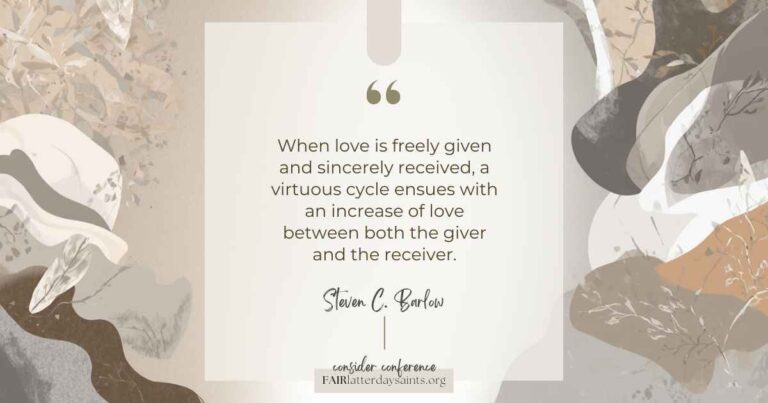
Serving in the Savior’s way transforms both the giver and the receiver. Joy deepens when we follow Christ’s example of compassion and become instruments of His love.
How to do it:
- – Pray for the Spirit to reveal who around you needs comfort or encouragement.
- – Reach out personally—with a visit, message, or small act of service.
- – Reflect afterward on how your own joy increased as you served.
Encouraging Thought:
- When we bring others to Christ, we find ourselves.
Ideas for Teaching
The Empty Tomb—Full of Hope
Objective: Help learners understand how Christ’s Resurrection removes fear and brings hope in times of loss.
Materials Needed:
- – Small box or container (representing the tomb)
- – Slip of paper for each participant
- – Scriptures: Isaiah 25:8; 1 Corinthians 15:54–57
Activity Steps:
Activity Steps:
- Introduction (5 min): Show the empty box and ask, “What does this empty space represent?” Invite learners to write a fear or sorrow on their paper and place it inside. Then open the box again—empty—to symbolize the empty tomb and freedom from those burdens.
- Scripture Discussion (5 min): Read Isaiah 25:8 and 1 Corinthians 15:54–57 together. Discuss what it means that Christ “swallowed up death in victory.” How does this promise change the way we see trials?
- Application (5 min): Invite participants to share a moment when hope in the Resurrection helped them—or could help them—overcome fear or grief.
Follow-Up Question: How can remembering the empty tomb help you face something that feels impossible right now?
Peace Not as the World Giveth
Objective: Help learners recognize the difference between worldly peace and the lasting peace Christ offers through the Spirit.
Materials Needed:
- – Two glass jars: one filled with calm water, one shaken with glitter or sand
- – Scripture: John 14:26–27
Activity Steps:
Activity Steps:
Introduction (5 min): Show the two jars. Ask, “Which one looks peaceful?” Explain that life can feel like the swirling jar, but the Savior’s peace settles our hearts.
Scripture Discussion (5 min): Read John 14:26–27. Ask learners to define “peace not as the world giveth.” How can the Holy Ghost help us find stillness when the world feels chaotic?
Application (5 min): Invite each person to share one practice that helps them feel Christ’s peace (e.g., prayer, music, temple worship, nature).
Follow-Up Question: When your life feels like the shaken jar, how can you invite the Savior’s peace to ‘settle’ your heart?
Turning Sorrow into Joy
Objective: Help learners see how faith in the living Christ transforms sorrow into lasting joy.
Materials Needed:
- – Two pieces of paper labeled Sorrow and Joy
- – A flashlight or small lamp
- – Scripture: John 16:20–22; The Living Christ
Activity Steps:
Activity Steps:
Introduction (5 min): Dim the lights and hold up the “Sorrow” paper. Shine the light on it and switch to “Joy,” explaining that Christ’s light transforms darkness into hope.
Scripture Discussion (5 min): Read John 16:20–22. Ask: What did Jesus mean when He said our sorrow would be turned into joy? How have you seen that promise fulfilled in your life or others’?
Application (5 min): Invite participants to identify one sorrow or struggle that could become a source of joy through faith in the Savior.
Follow-Up Question: What helps you keep believing that joy will come, even when you can’t see it yet?
QUICK REFERENCE
Key Points
- Jesus Christ conquered death through His Resurrection, fulfilling Isaiah’s prophecy that the Lord would “swallow up death in victory.”
- The Savior’s peace is not circumstantial but spiritual—offered through the companionship of the Holy Ghost.
- Through faith in Christ, sorrow is transformed into lasting joy and hope that transcends mortal trials.
- The Living Christ bears modern apostolic witness of Jesus’s divinity and continuing role as Redeemer.
- Disciples today can find assurance, direction, and healing through personal testimony of the risen Lord.
Core Apologetic Answers
- Why trust modern prophets?
- God’s pattern has always been to guide His children through living prophets (Amos 3:7; Ephesians 4:11–13).
Modern apostles echo the same testimony borne by ancient witnesses—that Jesus lives and leads His Church today (The Living Christ).
As promised in John 14:26, the Holy Ghost confirms prophetic truth personally to those who seek with faith. - Why does God allow mistakes?
- God honors moral agency, allowing both individuals and leaders to learn, grow, and rely on Christ’s grace (Ether 12:27).
Though human, God’s servants are guided so His overarching purposes are fulfilled (Doctrine and Covenants 1:24–28). - Experiencing imperfection invites humility and dependence on revelation rather than on fallible people—deepening discipleship.
Key Resources
Scriptures
- Isaiah 25:8 — “He will swallow up death in victory; and the Lord God will wipe away tears from off all faces.”
John 14:26–27 — “Peace I leave with you, my peace I give unto you.”
Church Documents
Teaching in the Savior’s Way (especially sections on “Teaching by the Spirit” and “Inviting Conversion”)
Online Resources
- Come, Follow Me — Easter: “He Will Swallow Up Death in Victory” (ChurchofJesusChrist.org)
- “Greater Love” (Church Video, Easter Message)